Moth orchids
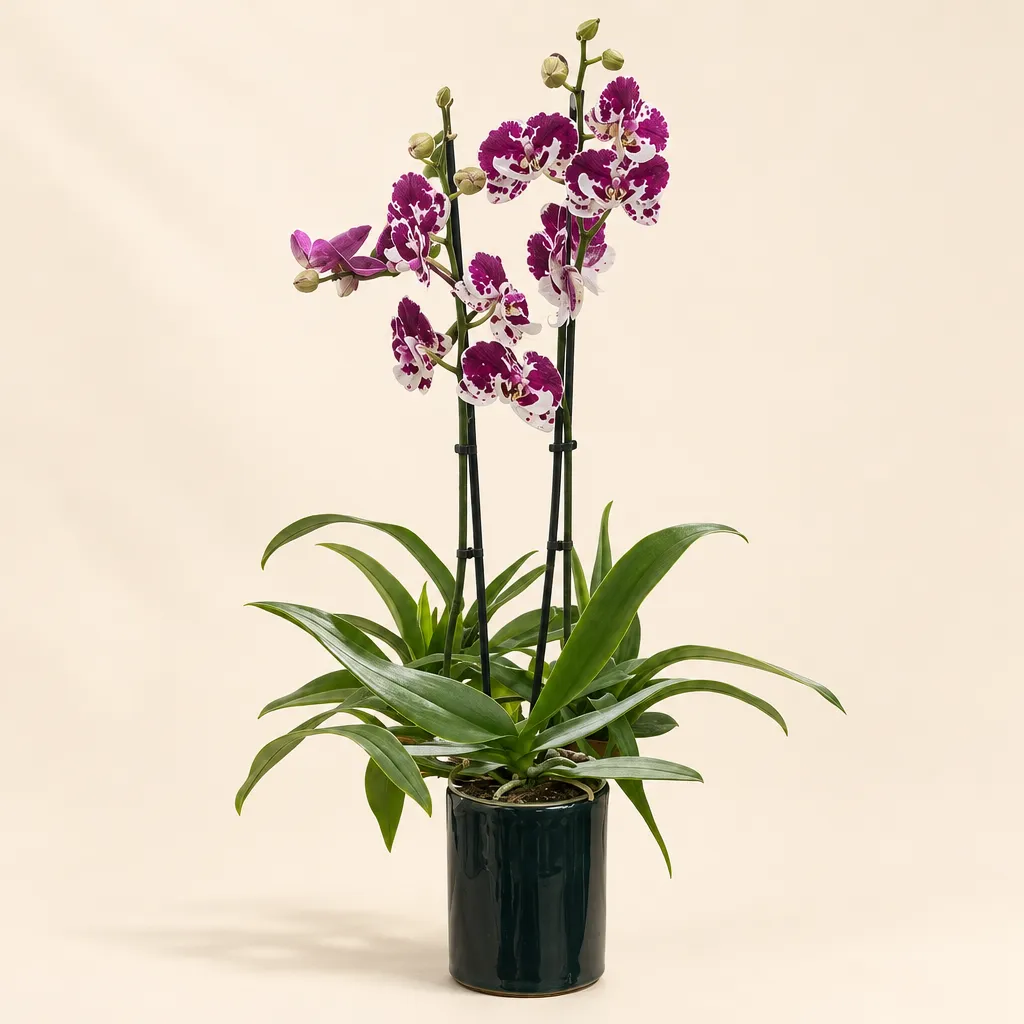 For illustration
Phalaenopsis is a group of orchids. Ask us about the exact variety, flower colour and size of the plant you’re choosing.
Order it from us
- Botanical name
- Phalaenopsis
- Growth and life cycle
- You are growing a perennial orchid with thick leaves and roots, some of which grow in the air. In nature, it clings to trees. At home, it needs an airy growing mix rather than regular potting soil. After flowering, it continues to grow leaves and roots and can flower again.
- Choosing a pot
- Choose a pot with drainage holes, only slightly larger than the root ball. A clear pot will help you check the roots. Use an airy orchid mix. If you use a decorative outer pot, make sure you can take the inner pot out and empty the water.
- Light
- Bright, indirect light
- Also copes with low light
- Yes
- When to water
- Before watering, check that the mix is almost dry a little below the surface too, and that the pot feels lighter. In a clear pot, silvery roots within the mix are another sign that it is time to check. Water thoroughly until water comes out of the drainage holes, empty the decorative outer pot, and avoid leaving water in the center of the leaves. Brown, soft roots usually indicate excess moisture. Wrinkled leaves can indicate dryness or damaged roots.
- Potting mix and drainage
- An airy orchid mix. Watering adjustments also depend on the type of mix.
- Feeding
- When your orchid grows a new leaf or new roots, you can feed it with orchid fertilizer according to the instructions, on moist growing medium. If the roots are damaged or the plant is dehydrated, take care of watering and drainage first and hold off on feeding.
- Pruning and tidying
- Cut off a dried flower spike near the base with a clean tool, and leave green leaves and firm aerial roots in place. You can leave a flower spike that is still green, as it sometimes branches and blooms again.
- The first few days at home
- Check the potting mix rather than watering on a fixed schedule; keep conditions stable when there are buds.
- What to watch for
- If buds fall off, check for a sudden change of location, air conditioning drafts or nearby ripening fruit. Pale, dry patches on the leaves may indicate sunburn; a soft, dark area at the heart of the leaves needs to be checked for rot.
- Placement and climate
- Near a bright window with very little or no direct sun.
- Propagation
- If a plantlet appears on the flower stalk, you can separate it only after it has developed several leaves and roots a few centimeters long, but not every plant produces one.
- Around pets
- We haven’t verified whether this plant is safe around pets. Ask us before choosing.
- Care level
- Needs regular attention