Has your orchid stopped blooming and are its leaves turning yellow? How to check and care for your Phalaenopsis orchid at home
One yellow leaf alone doesn't tell you what happened to your orchid. Here's how to check the leaves, roots, bark and crown before you water or move it, and understand why your Phalaenopsis isn't blooming again.
The Zairi Flowers team · Updated 22.11.2026
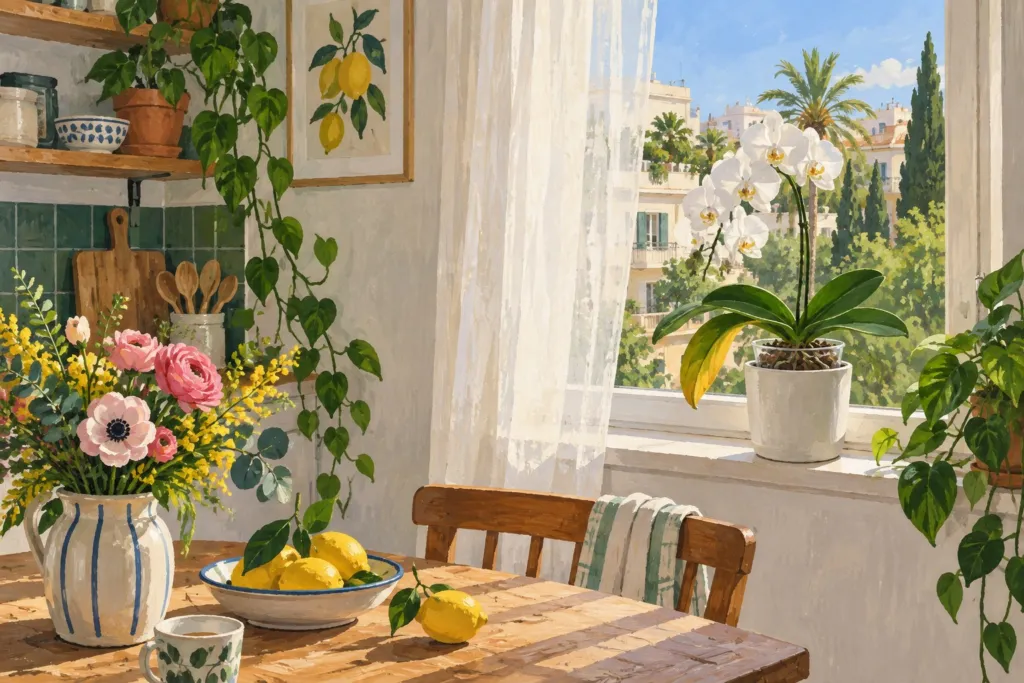
You received an orchid as a gift. It bloomed for months on the windowsill, and now only leaves and a bare flower spike remain. Then one of the lower leaves starts turning yellow. The question comes straight away: is it dying? And what do you do now?
In most cases, it isn't dying. Before you water more, move it or repot it, check a few things. A yellow leaf on its own can be a sign of natural aging, overwatering, dryness or too much sun. Only when you look at it alongside the condition of the roots, the bark in the pot and the crown do you get a picture you can act on.
This guide is about the Phalaenopsis orchid, the one with thick leaves and fleshy roots. Other orchids, such as Cymbidium or Dendrobium, have different needs for light, temperature and nighttime cooling, so what is written here does not automatically apply to them. We have also gathered the basics of everyday care in the short guide Phalaenopsis orchids at home: light, roots and watering.
How Phalaenopsis lives
In nature, Phalaenopsis does not grow in soil. It clings to tree bark, and its roots absorb moisture and oxygen from the air and rain. Almost all its care at home follows from this: it needs a coarse growing medium of pine bark or coconut chips that leaves air around the roots. Regular potting soil suffocates them and leads to rot. If your orchid was ever moved into regular soil, that is the first suspect.
It is usually planted in a clear plastic pot placed inside a decorative outer pot. The pot is clear for a reason: light reaches the roots, and you can see them without taking the plant out. This is the best diagnostic tool you have at home, and it is worth using before making any decision.
Four checks before you do anything
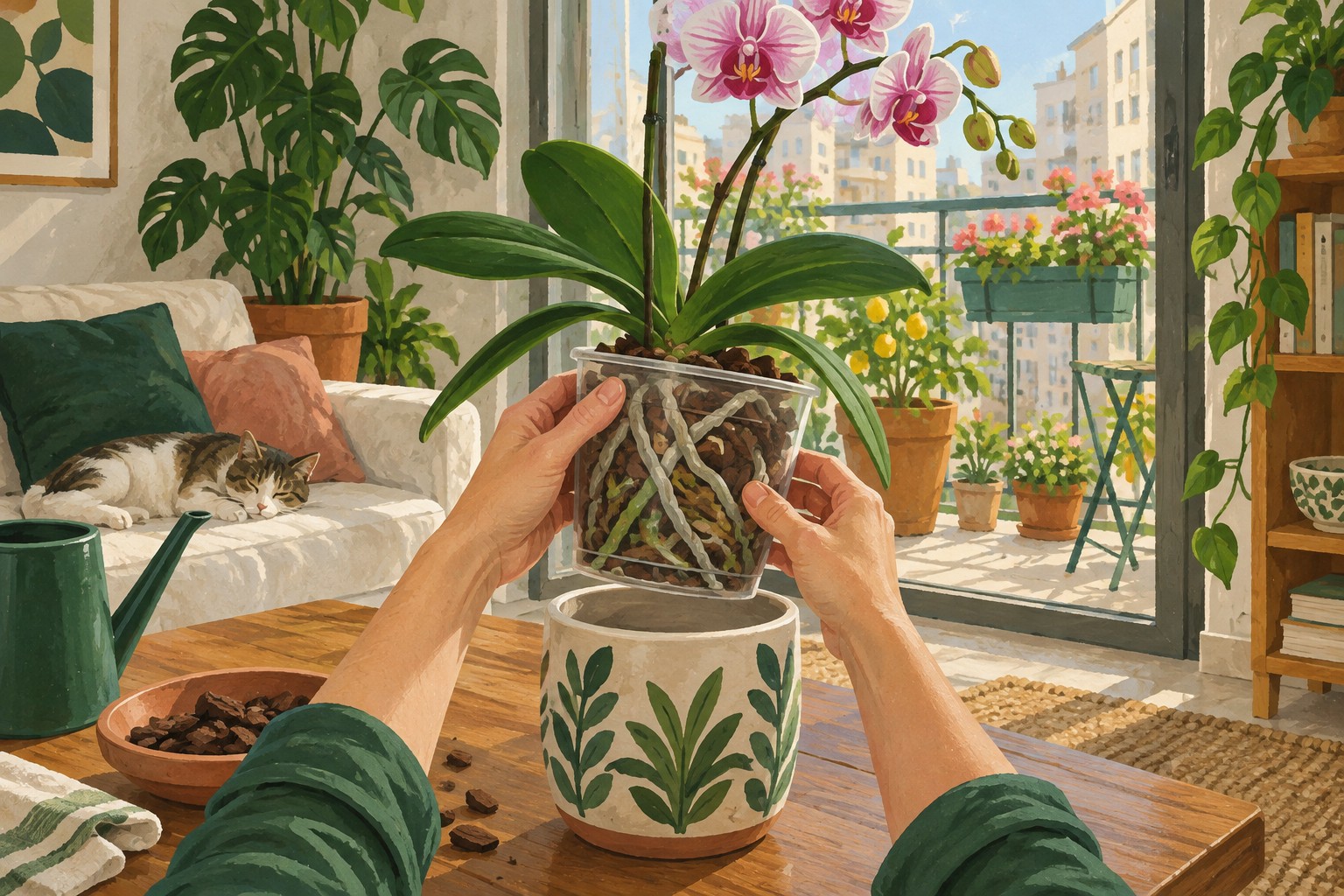
Start with the leaves. How many are yellow: just the bottom one, or several at once? Is the leaf soft and limp, wrinkled and leathery, or firm with a spot on the side facing the window?
Next, the roots. Lift the transparent pot out of its outer container and take a look. Green roots are still full of water. Silvery or greyish roots are dry and ready for watering. Roots that are brown, soft and crush when touched are rotten, a result of prolonged moisture or a lack of oxygen. Dry, shrivelled roots indicate a long period without enough water.
The third check is the bark. Look through the clear side of the pot to see whether it is damp or dry deeper down, not just in the top layer.
Finally, check the crown, where the leaves grow from the central stem. Is water sitting there? Are the bases of the leaves dark or black?
Once you have answers to all four questions, you can decide what to do.
What the leaves and roots tell you together
| What you see on the leaves | What you see in the roots and pot | The likely cause | What to do |
|---|---|---|---|
| One lower leaf slowly turns yellow and dries out, while the upper leaves stay green and firm | Healthy green or silvery roots | Natural leaf aging | Wait for it to fall off, without changing watering |
| Several leaves turning yellow at once, soft and limp | Brown, soft roots, wet bark | Overwatering or root rot | Stop watering, remove rotten roots and repot in fresh bark |
| Wrinkled, leathery leaves, sometimes turning yellow | Gray, dry or shriveled roots | Prolonged dryness | Water thoroughly so the water reaches all the roots |
| Leaves turn yellow or black from the base and fall off quickly | Water has pooled in the crown of the plant | Crown rot | Dry the crown immediately and stop pouring water from above |
| Yellowish bleaching or brown-black spots on the side facing the window | Healthy roots | Too much direct sunlight | Move it away from the glass or filter the light |
Look at the first two rows. In both, the leaf is yellow, but the care needed is completely different. Watering more because a lower leaf is quietly aging can cause the very problem described in the second row. The yellow leaf starts the check, and the roots give you the answer.
If the roots are rotting, take the plant out of its pot, remove the brown, soft roots with clean scissors, and repot it in fresh bark. If it is planted in regular soil, now is the time to switch to a suitable orchid potting mix. We explain when else to repot, and when not to, in the guide When does a plant really need a different pot?
Watering by root color
A fixed watering schedule is an easy way to get it wrong. In a Tel Aviv apartment in summer, or in a room where the air conditioner runs for hours, the pot dries out at a different rate than in spring with an open window. Instead of counting days, look at the roots: when they turn silvery, it is time.
When you water, let the bark soak thoroughly. A thorough watering that wets all the potting mix is better than a few drops every day. After watering, there is a step many people skip: emptying the outer pot. It usually has no drainage hole, and water left at the bottom sits beneath the roots and causes rot. Take out the clear pot, let it drain, and only then put it back in the outer pot.
Water into the bark, not over the leaves. If water gets into the crown of the plant, tilt it gently or soak up the water with a paper towel. Water left there can cause crown rot, where the leaves turn yellow or black at the base and fall off quickly.
Light in Tel Aviv: the direction your window faces is just a starting point
Phalaenopsis needs bright, indirect or filtered light. An east-facing window with gentle morning sun is a good rule of thumb, but nothing more. What really matters is how many centimeters separate the leaves from the glass, whether there is a thin curtain, whether the upstairs neighbors' balcony shades the window, how hot the room gets in summer, and whether an air-conditioning vent blows directly onto the plant. We explain how to check the light you actually have in the guide What light do you really have near your window?
There is a real trade-off here. Moving your orchid closer to the window gives it more energy for a new flower spike, but also increases the risk of leaf burn and hot or cold drafts. If you move it closer, watch the leaves over the following weeks. Yellowish bleaching or dark spots on the side facing the glass are a sign to move it back a little or add a curtain. In any case, keep it away from the air conditioner vent, even if the light there looks just right.
Why it isn't blooming again
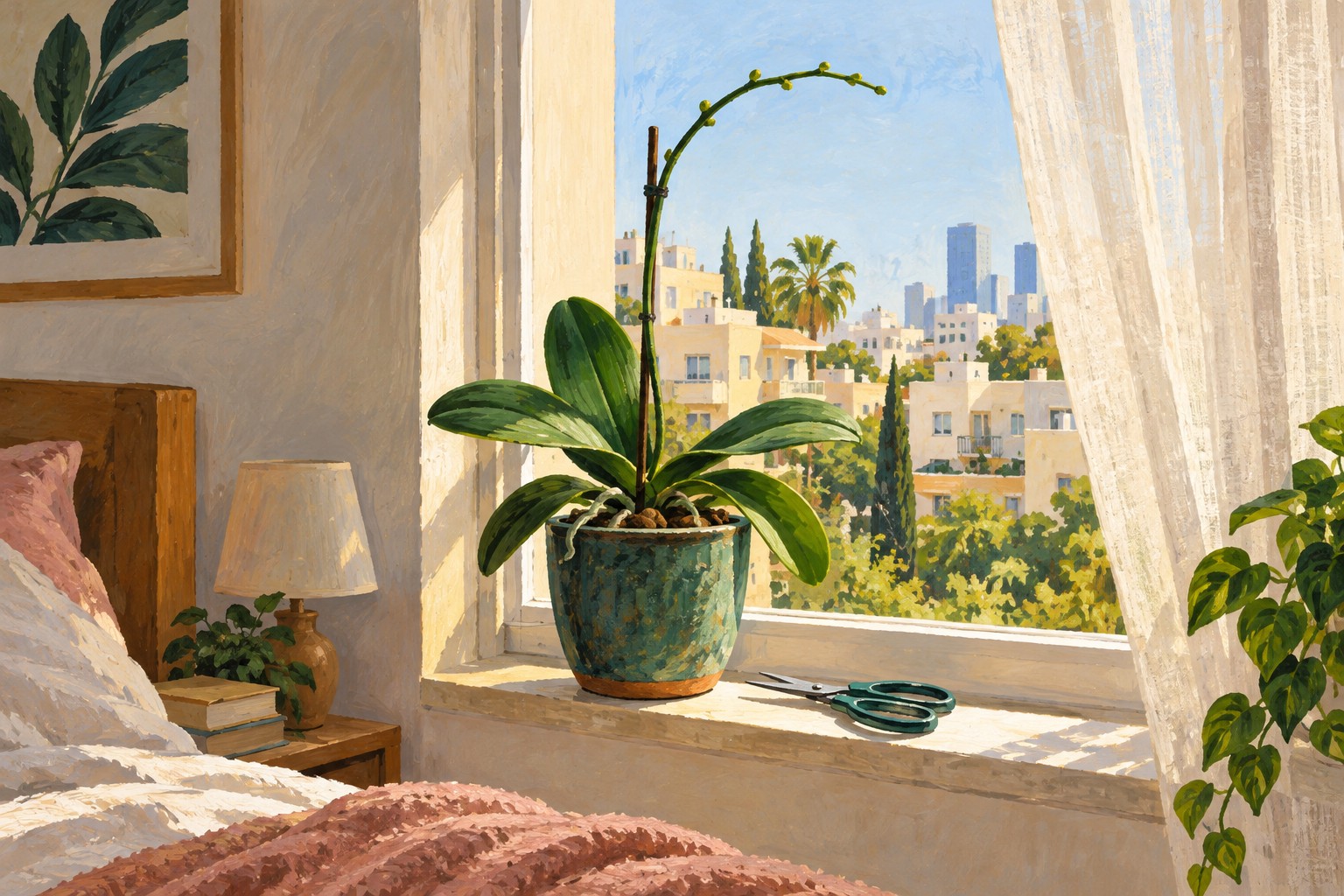
First, flowers falling off after two to four months of blooming mark a natural resting phase. The plant isn't dead, it's resting.
To grow a new flower spike, a Phalaenopsis needs a few weeks when nights are 5 to 7 degrees cooler than days. In an apartment where the air conditioner keeps the temperature the same day and night, that difference simply does not happen. In Tel Aviv, it usually happens in autumn, when the nights start to cool down. If your orchid is healthy, with firm leaves and healthy roots, but still is not flowering, find a spot at home where nights cool down naturally, while keeping it in bright, indirect light and away from air-conditioning vents.
And what do you do with the old flower spike? If it stays green, you can trim it above the second or third node from the bottom, those small bumps along its length. If it has turned yellow and dried out, cut it close to the base. Use clean scissors, and put them back somewhere children cannot reach.
If you use orchid fertilizer, follow the instructions on the label exactly, and keep the bottle out of reach of children and pets. Fertilizer does not fix rotten roots or a lack of cooler nights, so sort out watering and light first.
Children, cats and a spot on the shelf
Before placing an orchid, or any other potted plant, where a curious cat or toddler can reach it, check that specific plant. Some houseplants and cut flowers can be toxic if eaten, so do not assume a plant is safe just because it is common. The right spot for an orchid meets two conditions: suitable light, and being out of reach of children and pets.
If your current orchid did not survive and you are choosing a new one, or you are looking for a gift for someone in Tel Aviv, look at the leaves and roots before you choose. Firm leaves and green or silvery roots visible through the clear pot are a good start. You can see our selection of orchids on the website, and in our shops we will be happy to help you choose.
A yellow leaf is an invitation to check, not a verdict. Look at the roots through the clear pot, feel the bark, take a look at the heart of the plant, and only then decide whether to water it, let it dry out or move it. You can find more guidance on houseplants, planters and cut flowers inOur guides. And if you have a question about a particular orchid, take a photo of it, including the roots, andwrite to us or give us a call. We're a three-generation family business at Carmel Market and on Dizengoff, and we're happy to help.
Frequently asked questions
Why are the leaves of a Phalaenopsis orchid turning yellow?
A yellow leaf is a sign, but on its own it is not a diagnosis. It can result from natural aging, overwatering, prolonged dryness or direct sunlight that is too strong. To work out which it is, first check the roots through the clear pot, the moisture in the bark deeper in the pot and the crown of the plant. One lower leaf slowly turning yellow, while the upper leaves are green and firm and the roots are green or silvery, is usually normal aging. There is no need to change your watering. Several soft leaves turning yellow together, with brown roots and wet bark, point to too much water. Wrinkled, leathery leaves with gray, shriveled roots indicate dryness. The leaf looks similar in all these cases, but the care needed is very different. So do not water more before checking the roots.
How do you know when to water a Phalaenopsis orchid?
The safest way to decide when to water is by the color of the roots you can see through the clear pot. Green roots are still full of water. When they turn silver or grayish, it is time. A fixed schedule can be misleading, especially in a Tel Aviv apartment, because in summer or in a room where the air conditioner runs for hours, the pot dries out at a different rate than in spring with an open window. When you water, let the bark soak thoroughly until all the growing medium is wet. Then take the clear pot out of its outer container, let it drain and empty the container. It usually has no drainage hole, and water standing at the bottom causes rot. Water into the bark, not over the leaves. If water gets into the center of the plant, gently tilt it or soak up the water with paper.
How do you spot root rot in an orchid, and what should you do?
Brown roots that are soft and crush when touched are rotten, usually after prolonged dampness or a lack of oxygen. This often comes with several leaves turning yellow at once and becoming limp, and bark that stays wet deep in the pot. In this case, stop watering. Take the plant out of the pot, remove the brown, soft roots with clean scissors, and move it into fresh bark. If the orchid was once moved into regular potting soil, that is the first thing to suspect: the soil suffocates the roots. It is time to switch to a coarse orchid mix of pine bark or coconut chips that leaves air around them. When you have finished, put the scissors back somewhere children cannot reach.
Why has the orchid stopped blooming and why is it not growing a new flower spike?
First, flowers falling after two to four months of blooming is a natural resting stage, and the plant is not dead. To grow a new flower spike, a Phalaenopsis needs several weeks when nights are 5 to 7 degrees cooler than days. In Tel Aviv, this usually happens in autumn. In an apartment where air conditioning keeps the temperature the same day and night, that difference does not occur. If the leaves are firm and the roots are healthy but there are still no flowers, look for a spot at home where nights naturally get cooler, with bright, indirect light and away from an air-conditioning vent. Orchid fertilizer will not solve a lack of nighttime cooling or rotten roots, so get watering and light right first. If you use fertilizer, follow the label and keep it away from children and pets.
What do you do with the flower spike after the flowers have fallen?
It depends on the condition of the flower spike, so look at it first. If it is still green, you can trim it above the second or third node from the bottom. These are the small bumps along it. If it has turned yellow and dried out, cut it close to the base. In both cases, use clean scissors, and after trimming, put them back out of children's reach. Remember that trimming alone will not bring new blooms. The orchid needs healthy leaves and roots, bright indirect light, and a few weeks of nights that are cooler than the days. A bare flower spike after months of blooming is a normal sight at home. It means the plant is entering a resting period.
Where should you place a Phalaenopsis orchid in an apartment in Tel Aviv?
Phalaenopsis needs bright, indirect or filtered light. An east-facing window with gentle morning sun is a good rule of thumb. In practice, check a few other things too: the distance between the leaves and the glass, whether there is a sheer curtain, whether the upstairs neighbors' balcony casts shade, how hot the room gets in summer, and whether an air-conditioning vent blows onto the plant. Moving it closer to the window gives it more energy for flowering and increases the risk of burns. If you move it, watch the leaves over the following weeks: pale yellowish patches or dark spots on the side facing the glass are a sign to move it farther away or add a curtain. And if you have a cat or toddler at home, check the specific plant before placing it within their reach, because some houseplants can be poisonous if eaten.