How to choose plants and planters for a Tel Aviv balcony: a practical guide to direction and sunlight
Before buying even one plant, check how much sun actually reaches your balcony. A guide by direction: what to plant facing south, west, east and north, which planter to choose, how to check toxicity to pets and how to fertilize using the instructions on the back of the product.
The Zairi Flowers team · Updated 22.11.2026
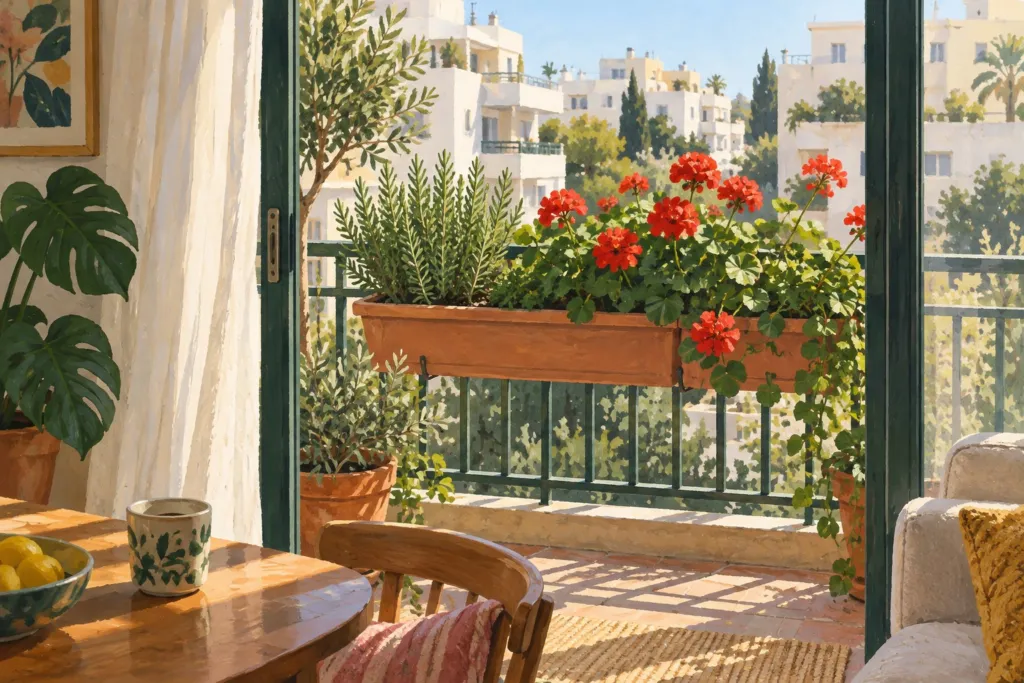
When you stand in front of the plant shelves at the market with an empty balcony in mind, you usually have one question: what will survive at my place? The answer starts before you buy, on the balcony itself. The direction it faces gives you a starting point, but the building opposite, the upstairs neighbors' awning and the white wall that reflects heat matter just as much.
First: count the hours of sunlight
Choose an ordinary day and look outside every hour or two. Note when direct sunlight reaches the floor and railing, and when it disappears. Notice exactly where it falls, too: often half the balcony is in the sun and half is in the shade, giving you two little gardens instead of one. Check whether any concrete or glass surfaces heat the air around them, and whether a pergola or awning filters the light.
Only after this check is it worth looking at which direction your balcony faces. A rule of thumb for Tel Aviv: south gets direct sun for most of the day. West gets the strong afternoon sun, along with wind from the sea. East enjoys gentle morning sun and shade at midday, while north gets very little direct sun but bright natural light. Pay attention to the season too: in summer, the sun is high, and a south-facing balcony covered by the neighbours' balcony above gets less sun at midday than you might think. In winter, when the sun is low, it reaches further in. We also explain how to read the light you actually have in the guide What light do you really have by your window?
South-facing balcony: lots of sun, lots of water
This is the place for full-sun plants. Rosemary, Lavender, thyme and oregano will feel at home here, as will Geranium, gazania and portulaca. Succulents such as aloe vera and portulacaria do well, and anyone who wants cherry tomatoes or peppers will get the sun they need here.
The trade-off is water. The potting mix dries out very quickly, both from the sun and from the heat rising from the floor and the building's walls. In peak summer, you may need to water every day, sometimes more often, depending on the size of the planter and the plant. So Touch the soil before each watering. Choose large planters and materials that insulate the roots from heat, and avoid thin plastic planters exposed to the sun all day.
West-facing balcony: heat and wind together
On a west-facing balcony, the sun arrives during the hottest hours, and in Tel Aviv it comes with a strong sea breeze. The wind dries plants out faster, can tear soft leaves and can knock over a planter that is not firmly secured.
The sun-loving plants from the south-facing balcony also suit this spot, as long as you choose the hardier ones. Bougainvillea will do well in a sheltered corner, away from the exposed railing. For the floor, choose heavy, stable planters. Railing planters need to be firmly secured. Place plants with soft leaves, such as basil, at the back, close to the wall.
East-facing balcony: the most forgiving
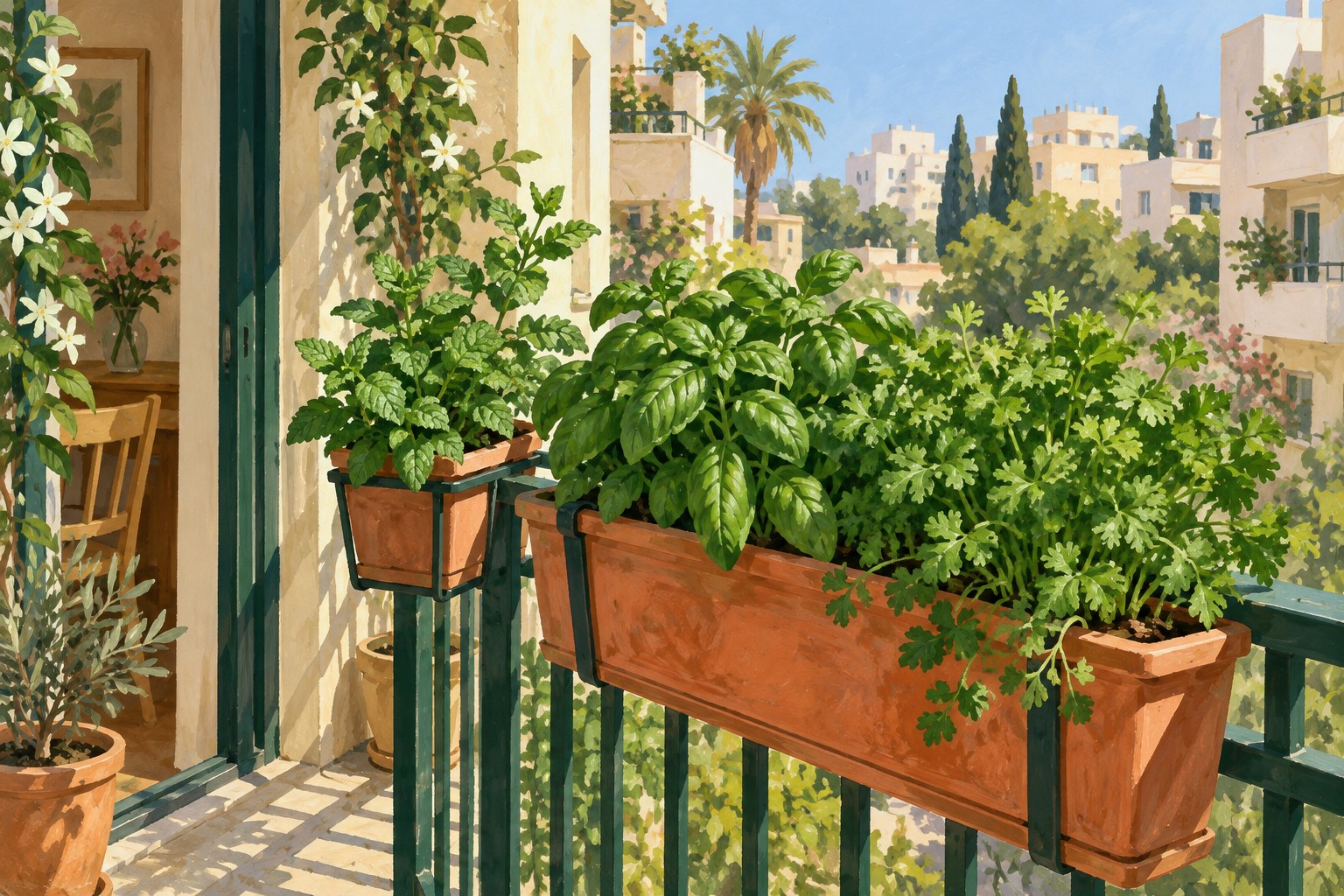
In the Israeli summer, this is probably the most comfortable balcony. The plants get direct light during the cool morning hours, and by noon, when the heat sets in, they are already in the shade.
An herb garden works well here: basil, lemon verbena and parsley. Mint is best planted in a separate planter, because its roots take over everything nearby. For flowers: petunia, Pentas and Australian violet. For hardy foliage: a dracaena placed below the railing and sheltered from the wind, andspider plant. Vegetables that need full, uninterrupted sun may yield less here, and that is a trade-off worth knowing about in advance.
Basil, Mint and other herbs and vegetable plants You can order ours in pots and plant each one in its own planter.
North-facing balcony: the real risk is too much water
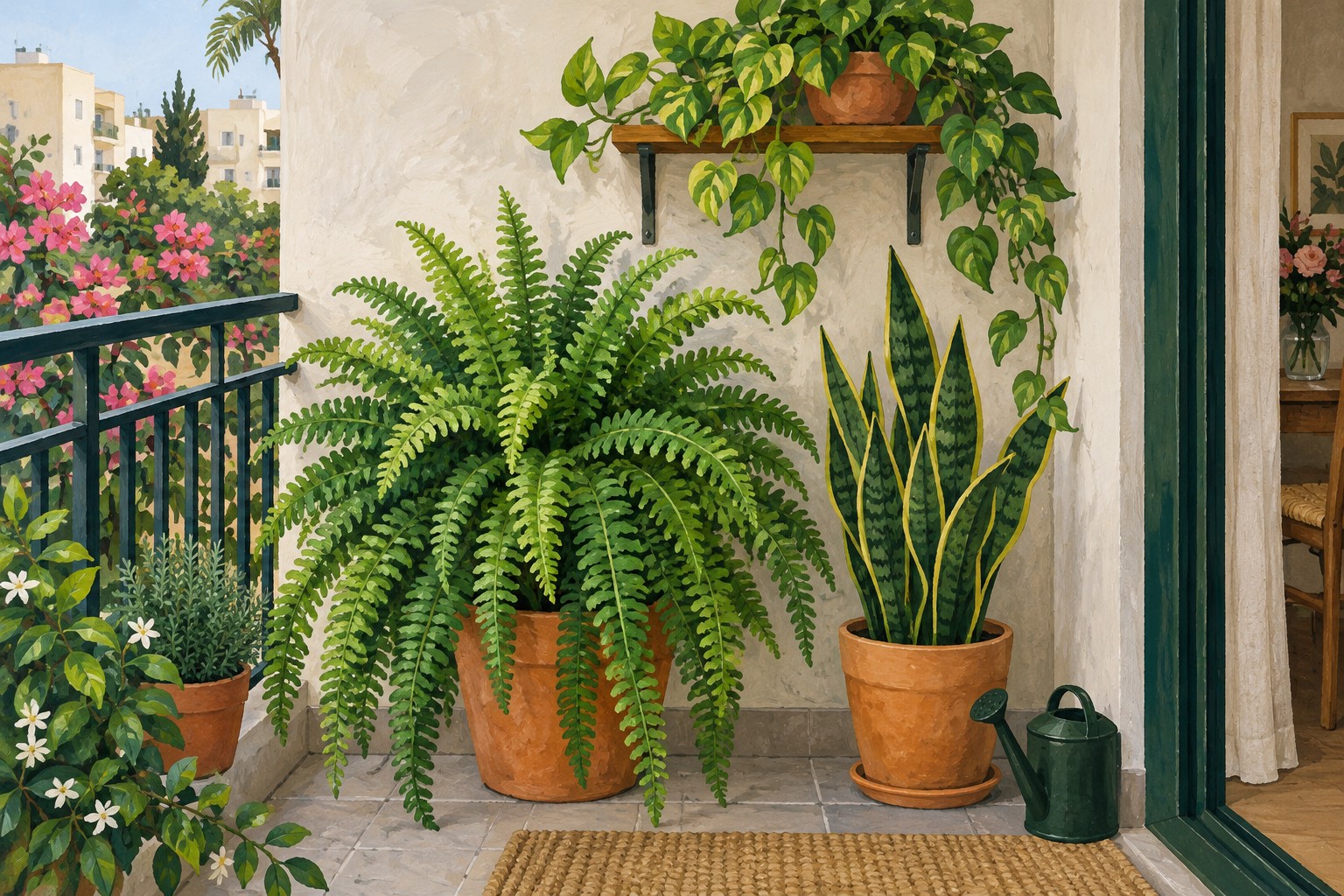
On a north-facing balcony, the soil stays cool and water evaporates slowly. Watering as often as you would on a south-facing balcony invites root rot. That is the main mistake to watch out for here. Water only when the soil has dried out deeper down too.
Choose foliage and shade plants: Pothos, Boston fern, philodendron, Syngonium, spider plant andsnake plant, which does well in almost any light conditions. For blooms in the shade, there is Begonia and impatiens. Keep in mind that pothos, philodendron and snake plant are also on the lists of plants to keep away from pets. More on that below.
Which planter suits which balcony
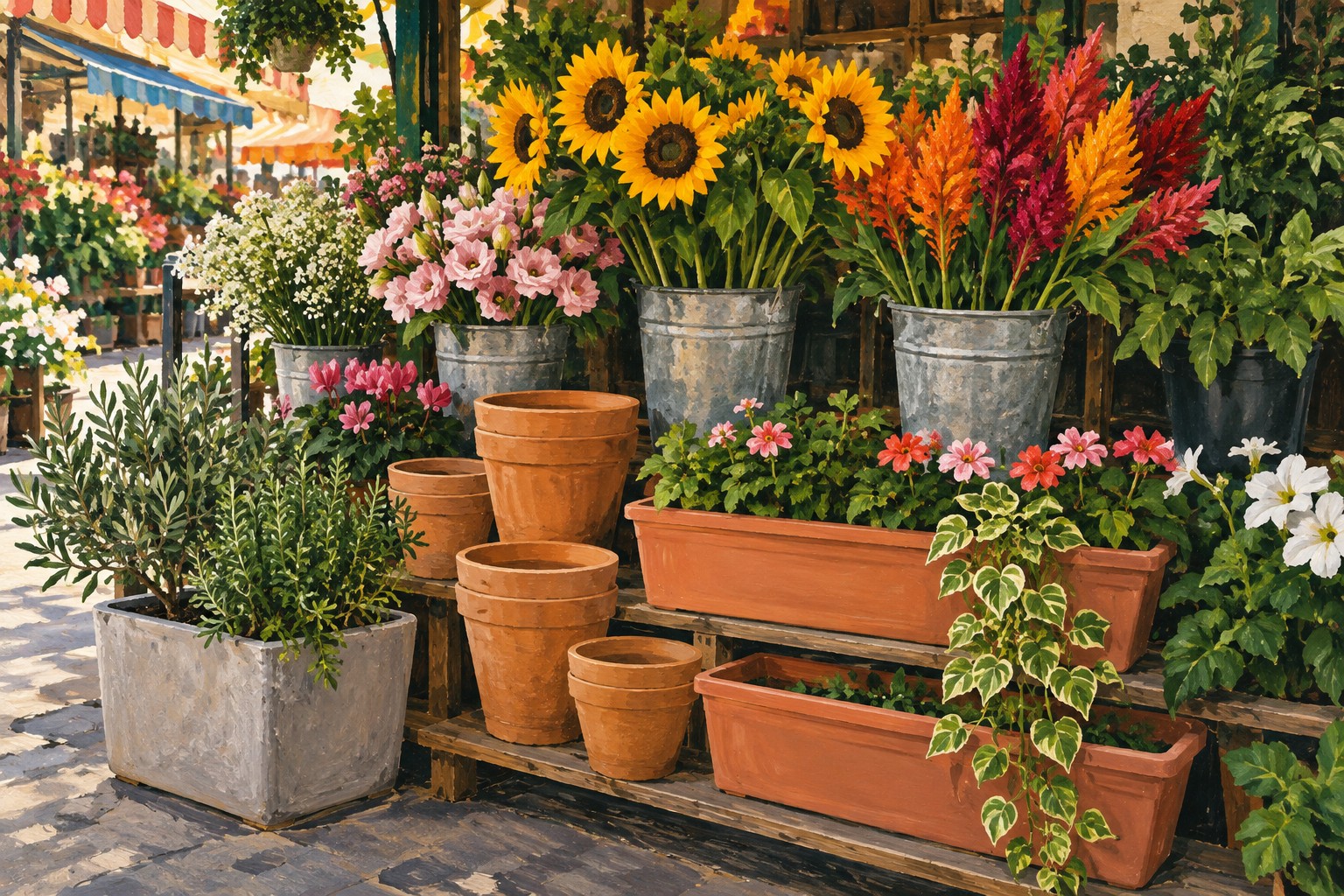
| Material | When to choose it | What to watch out for |
|---|---|---|
| Plastic or resin | Railing and hanging planters, north-facing and east-facing balconies | Heats up quickly in direct sunlight, and basic models crack and fade in the sun over time |
| Clay (terracotta) | Partly shaded balconies and plants sensitive to excess water | Loses water quickly and breaks if it falls in the wind |
| Glazed ceramic | Corners sheltered from the wind and shade plants | Heavy, not breathable, and needs a drainage hole |
| Concrete or fiber-reinforced concrete | A floor planter on an exposed south-facing or west-facing balcony | Concrete is very heavy, and fiber-reinforced concrete is lighter. Check the balcony's load capacity before placing a large planter |
The idea is simple: the hotter and more exposed your balcony is, the more insulation and stability your planter should have. On a shaded balcony, breathable terracotta will help you avoid drowning the plant. We cover sizes, drainage and decorative outer pots in the guide A good-looking container that also suits the plant. You can see our planters and ceramics on the website, and at our shops in Carmel Market and on Dizengoff, we can choose a planter with you that suits your balcony.
Drainage, saucers and the neighbors downstairs
Every balcony planter needs open drainage holes at the bottom and an airy potting mix that drains well, for example with volcanic tuff or perlite mixed in. Without these, water collects at the bottom and the roots suffocate, whichever way the balcony faces. A planter on the floor is best raised slightly on feet so the drainage holes stay clear.
Choose a saucer or tray in the right size for each planter. It protects the flooring and prevents water from dripping onto the neighbors' balcony and the sidewalk. If water remains in the saucer long after watering, empty it. This is especially important on a north-facing balcony.
Cats, dogs and children: check before buying
Some house and balcony plants, as well as some cut flowers, are toxic to pets or young children if eaten. Do not rely on a general list of safe plants. Check each plant by its exact botanical name, for example in theASPCA Toxic and Non-Toxic Plants database, from the American Society for the Prevention of Cruelty to Animals.
A few examples worth knowing: every part of oleander is toxic. Lilies (Lilium) and daylilies are very dangerous to cats and can cause severe kidney damage. This also applies to lilies and Madonna lilies, whether in a bouquet or a pot. Philodendron, pothos and dieffenbachia contain crystals that cause burning in the mouth, swelling and vomiting. Snake plants can cause vomiting, and ficus has a milky sap that can irritate the skin and digestive system. Mint is also on the list as a plant that can cause vomiting and diarrhea when eaten in large amounts.
On the other hand, rosemary, thyme, basil, spider plant (Chlorophytum), Boston fern and calathea appear on lists of non-toxic plants, as do some peperomia varieties. These are worth checking too, based on the variety you bought. If you have a cat at home that likes chewing leaves, move the problematic plants to a high shelf, a wall-mounted hanger or a hanging basket it cannot reach.
Fertilizer and pesticides: what it says on the back of the product
For every fertilizer, supplement or pesticide, follow the manufacturer's instructions on the packaging for both dosage and frequency. On a hot balcony, water evaporates quickly and salts from the fertilizer stay in the potting mix. Too much fertilizer can burn roots.
Don't fertilize completely dry potting mix. Water it lightly with clean water first, and only then apply liquid fertilizer. Make sure the drainage water, which now contains fertilizer, doesn't run down to your neighbors or onto the street. Keep all products in their original packaging, tightly closed, in a closed, shaded cupboard, separate from food and out of reach of children and pets. The same rule applies to pruning shears and sharp tools.
Yellowing leaves? Check first
Yellowing is a sign, not yet a diagnosis. It can come from too much water, too little water, too little light or a lack of nutrients. Before adding fertilizer or moving a pot, go back to your list of sunlight hours, touch the growing medium and check the drainage. We describe four observations worth making before changing care in the guide Yellowing leaves? What to check before changing care: ", and inMore guides You’ll find instructions by plant type. Look for your specific plant, rather than one rule for the whole family.
Order, ask, visit
We’re a family business spanning three generations. It all started with the father of the family, who was a farmer, and today you’ll find us at Carmel Market and on Dizengoff. Alongside flowers, we also have planters, Clay and ceramic pots, Plants for home and office, Succulents and cacti, herbs and vegetable plants, Seeds and bulbs andGardening tools.
You can order on the website without paying upfront: fill out an order, and we'll get back to you by phone or WhatsApp to arrange payment and timing. If you visit or write to us, bring or send a photo of your balcony and the list of sunlight hours you noted down. With these details, it's much easier to choose a suitable plant and planter. Addresses, opening hours and a phone number are on the page Branches and contact details.
A good balcony doesn't come together in one shopping trip. Start with a few plants suited to the hours of sun you counted, give them a month, and see how they respond to the heat, wind and your watering routine. What thrives will teach you what to add, and what struggles will show you where to change the position or planter.
Frequently asked questions
How do you check how much sun your balcony gets before buying plants?
Choose a typical day and look outside every hour or two. Note when direct sunlight reaches the floor and railing, when it disappears and exactly where it falls. Often, half the balcony is sunny and half is shaded, so you can plan two corners with different plants. Also check whether a building opposite casts shade, whether an awning or pergola filters the light, and whether a white wall, concrete or glass reflects heat. Only after this check should you look at the direction the balcony faces, and use it only as a starting point. In Tel Aviv, south-facing balconies get direct sunlight for most of the day, while west-facing balconies get strong afternoon sun along with wind from the sea. East-facing balconies enjoy morning sun and are shaded at midday, while north-facing balconies get very little direct sunlight, with bright natural light.
What should you plant on a sunny south-facing or west-facing balcony?
Plants for full sun: rosemary, lavender, thyme and oregano, geranium, gazania and portulaca, and succulents such as aloe vera and elephant bush. Cherry tomatoes and peppers will also get the sun they need here. On a south-facing balcony, the soil dries out very quickly from the sun and the heat rising from the floor and walls. In peak summer, you may need to water every day, depending on the size of the planter and the plant. Touch the soil before each watering. On a west-facing balcony, a strong sea breeze adds to the heat, drying out plants, tearing soft leaves and potentially knocking over a planter. There, choose the hardier sun-loving plants. Place bougainvillea in a sheltered corner away from the railing, secure railing planters firmly, and move plants with soft leaves, such as basil, further back and close to the wall.
Which plants suit an east-facing balcony in Tel Aviv?
In the Israeli summer, an east-facing balcony is probably the most forgiving: direct light in the cool morning hours, and shade when the midday heat arrives. It is a good spot for an herb garden with basil, lemon verbena and parsley. Plant mint in a separate planter, because its roots take over everything nearby. For flowers, you can choose petunias, pentas and Australian violets. For hardy foliage, there are dracaenas, best placed below the railing to protect them from wind, and spider plants. Vegetables that need full, uninterrupted sun may yield less here, and that is a trade-off worth knowing about in advance. Before deciding, check how many hours of direct sunlight actually reach the balcony, because a building opposite or a neighbour's awning can shorten the morning sun.
What grows on a shaded north-facing balcony, and how do you avoid drowning the plants?
Choose foliage and shade plants: pothos, Boston fern, philodendron, syngonium, spider plant and snake plant, which manages in almost any light conditions. For flowers in the shade, there are begonias and impatiens. The main risk here is too much water. The growing medium stays cool and water evaporates slowly, so watering as often as you would on a south-facing balcony can lead to root rot. Water only when the growing medium has dried out deeper down, and check that drainage holes are clear and the growing medium is airy. If water remains in the saucer long after watering, empty it. A breathable terracotta planter can help plants that are sensitive to excess water. Note that pothos, philodendron and snake plant appear on lists of plants to keep away from pets, so if you have a cat or dog at home, place them high up.
Which planter suits a hot balcony, and which suits a shaded balcony?
The hotter and more exposed your balcony is, the more insulated and stable a planter you should choose. Concrete or fiber-reinforced concrete work well for a floor planter on a south-facing or west-facing balcony. Concrete is very heavy, and fiber-reinforced concrete is lighter, but either way, check the balcony's load capacity before placing a large planter. Plastic or resin are lightweight and suit railing and hanging planters on north-facing and east-facing balconies, but they heat up quickly in direct sunlight, and basic models crack and fade over time. Terracotta is breathable and suits partly shaded balconies and plants sensitive to excess water, but it loses water quickly and breaks if the wind knocks it down. Glazed ceramic suits spots sheltered from the wind, and because it is not breathable, it must have a drainage hole. Whatever the material, keep drainage holes clear, use an airy potting mix and choose a saucer of the right size to prevent water from dripping onto your neighbors.
Which balcony and indoor plants could be dangerous to cats, dogs or children?
Some houseplants and balcony plants, as well as some cut flowers, are toxic to pets or young children if eaten. Do not rely on a general list of safe plants. Check each plant by its exact botanical name, for example in the ASPCA database of toxic and non-toxic plants. Here are a few important examples: all parts of oleander are toxic. Lilies and daylilies are very dangerous to cats and can cause severe kidney damage, even when they come in a bouquet or a pot. Philodendron, pothos and dieffenbachia cause burning in the mouth, swelling and vomiting. Sansevieria may cause vomiting, and the milky sap of ficus may irritate the skin and digestive tract. Rosemary, thyme, basil and spider plant (Chlorophytum) usually appear on non-toxic lists, but these should also be checked by variety. Move problematic plants to a high shelf or a hanging basket.