A living plant: free cancellation as long as the plant has not left the shop. Arrived damaged, or wilted within 7 days despite proper care? We replace or refund. All cancellation and return terms
From the first day at home and through the whole year: what this plant needs and what is better avoided.
A short introduction
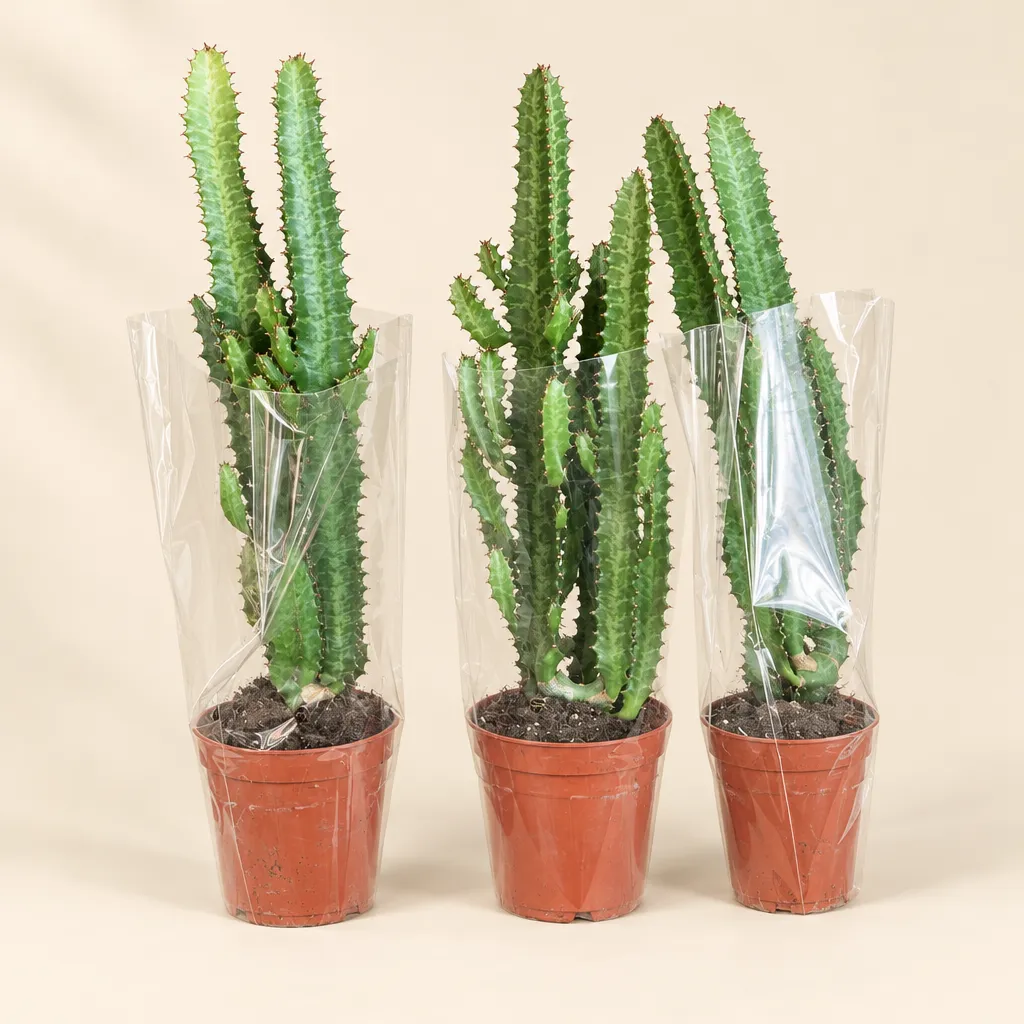
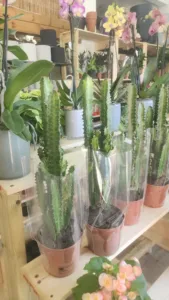
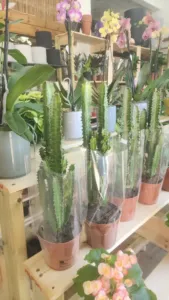
You get a perennial succulent with upright, three-ribbed stems, spines and small leaves along the edges. It looks like a cactus, but belongs to the spurge family. Its leaves may drop in cold or dry conditions.
The first days at home
Check for dryness before watering and place in a bright, well-ventilated spot.
Where should it go?
Indoors, give it bright, indirect light for many hours a day. Outdoors, give it partial sun. Protect it from the cold.
When should I water?
Check deep into the growing mix with a wooden skewer and lift the pot: water only when the mix is dry almost all the way through and the pot feels light. Water until water comes out of the drainage holes, then empty the saucer or decorative outer pot. Wrinkled stems in dry mix may indicate thirst. A soft, dark base in wet mix raises concern about rot.
Potting mix and feeding
Potting mix and drainage
Choose a succulent growing mix with added material such as pumice or perlite to improve aeration, so it does not stay wet for long. Use a pot with drainage holes and do not leave water in the decorative outer pot.
Feeding
Fertilize lightly when the plant puts out new growth in the warm season, following the instructions for succulent fertilizer. Skip feeding in winter, when growth stops, or when the plant shows signs of stress.
Through the year
Give the plant bright light for many hours a day. Without enough light, it stretches and struggles to support itself. In winter, it rests. Water very sparingly and keep the potting mix nearly dry. Protect it from the cold. If the branch tips suddenly turn brown, that's a sign of cold damage.
Pruning, a bigger pot and propagation
Pruning and tidying
No routine pruning is needed. Leave healthy stems in place and gently remove dust without injuring them. If you need to shorten a branch, cut with a clean tool while wearing gloves and safety glasses, and avoid contact with the white sap.
When to move to a bigger pot
While the plant is young and growing fast, you can move it up one pot size once a year. In the new pot, don't bury the trunk any deeper than it was before.
Propagation
You can propagate from a stem cutting once the cut has dried and sealed, using an airy, almost dry potting mix. Because the sap is irritating, it is best to do this only if you have experience, and with gloves and safety glasses.
Do and don’t
Good habits
Put it somewhere with bright light.
Water only when the potting mix is almost dry.
Water even less in winter, when the plant is resting.
Protect your skin and eyes when handling it. You can wear gloves, for example. The white sap can cause irritation.
What to avoid
Don't water while the potting mix is still damp. Wet mix can seriously harm the plant.
Don't bury the trunk any deeper when you move it to a new pot. It could rot.
Don't mist it. It doesn't need humid air.
Don't leave it in the cold. The branch tips can turn brown.
Signs worth checking
If pale, dry patches appear after moving the plant into the sun, check for overly strong exposure. Thin, elongated new growth may indicate a lack of light. Leaf drop alone can be a response to cold or dryness, but a dark, soft base calls for checking the roots and drainage.
Pot
Choose a stable pot with drainage holes, as the tall stems may make one side heavy. When the roots fill the pot, move to a container only slightly wider than the root ball, rather than a much larger pot.
Before buying even one plant, check how much sun actually reaches your balcony. A guide by direction: what to plant facing south, west, east and north, which planter to choose, how to check toxicity to

Reviews
There are no reviews yet.