African milk tree · Euphorbia trigona
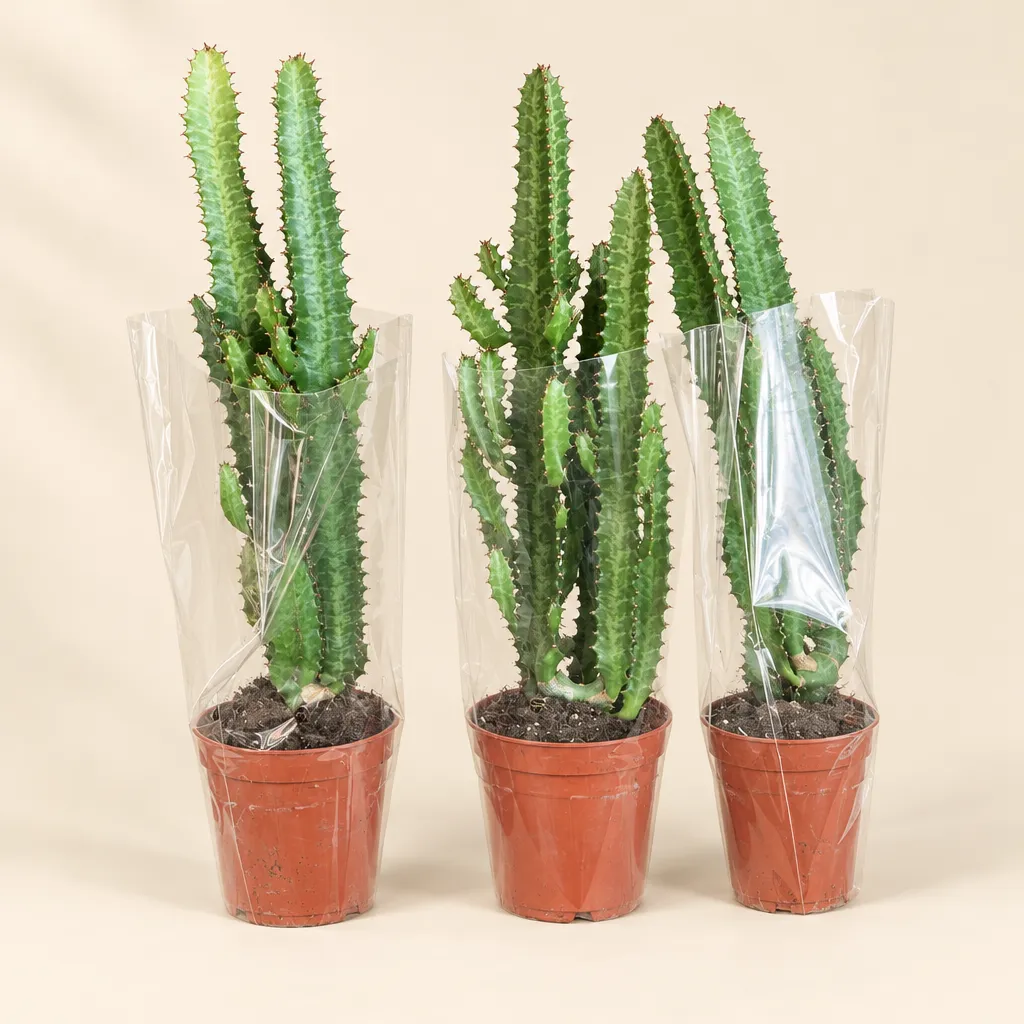 For illustration
The African milk tree is a succulent with upright, three-sided stems, small thorns and small leaves along the edges. It looks like a cactus, but belongs to the spurge family. Its stems contain a milky sap that irritates the skin and eyes.
Order it from us
- Botanical name
- Euphorbia trigona
- Plant family
- Euphorbiaceae
- Identification
- Species
- Growth and life cycle
- You get a perennial succulent with upright, three-ribbed stems, spines and small leaves along the edges. It looks like a cactus, but belongs to the spurge family. Its leaves may drop in cold or dry conditions.
- Choosing a pot
- Choose a stable pot with drainage holes, as the tall stems may make one side heavy. When the roots fill the pot, move to a container only slightly wider than the root ball, rather than a much larger pot.
- Light
- Depends on the variety and location
- When to water
- Check deep into the growing mix with a wooden skewer and lift the pot: water only when the mix is dry almost all the way through and the pot feels light. Water until water comes out of the drainage holes, then empty the saucer or decorative outer pot. Wrinkled stems in dry mix may indicate thirst. A soft, dark base in wet mix raises concern about rot.
- Potting mix and drainage
- Choose a succulent growing mix with added material such as pumice or perlite to improve aeration, so it does not stay wet for long. Use a pot with drainage holes and do not leave water in the decorative outer pot.
- Feeding
- Fertilize lightly when the plant puts out new growth in the warm season, following the instructions for succulent fertilizer. Skip feeding in winter, when growth stops, or when the plant shows signs of stress.
- Pruning and tidying
- No routine pruning is needed. Leave healthy stems in place and gently remove dust without injuring them. If you need to shorten a branch, cut with a clean tool while wearing gloves and safety glasses, and avoid contact with the white sap.
- The first few days at home
- Check for dryness before watering and place in a bright, well-ventilated spot.
- What to watch for
- If pale, dry patches appear after moving the plant into the sun, check for overly strong exposure. Thin, elongated new growth may indicate a lack of light. Leaf drop alone can be a response to cold or dryness, but a dark, soft base calls for checking the roots and drainage.
- Placement and climate
- Indoors, give it bright, indirect light for many hours a day. Outdoors, give it partial sun. Protect it from the cold.
- Propagation
- You can propagate from a stem cutting once the cut has dried and sealed, using an airy, almost dry potting mix. Because the sap is irritating, it is best to do this only if you have experience, and with gloves and safety glasses.
- Through the year
- Give the plant bright light for many hours a day. Without enough light, it stretches and struggles to support itself. In winter, it rests. Water very sparingly and keep the potting mix nearly dry. Protect it from the cold. If the branch tips suddenly turn brown, that's a sign of cold damage.
- When to move to a bigger pot
- While the plant is young and growing fast, you can move it up one pot size once a year. In the new pot, don't bury the trunk any deeper than it was before.
- Good habits
- Put it somewhere with bright light. Water only when the potting mix is almost dry. Water even less in winter, when the plant is resting. Protect your skin and eyes when handling it. You can wear gloves, for example. The white sap can cause irritation.
- What to avoid
- Don't water while the potting mix is still damp. Wet mix can seriously harm the plant. Don't bury the trunk any deeper when you move it to a new pot. It could rot. Don't mist it. It doesn't need humid air. Don't leave it in the cold. The branch tips can turn brown.
- Around pets
- Toxic to dogs and cats
- Around cats
- Toxic to dogs and cats
- Around dogs
- Toxic to dogs and cats
- Care level
- Easy to care for