Pansy · Viola × wittrockiana
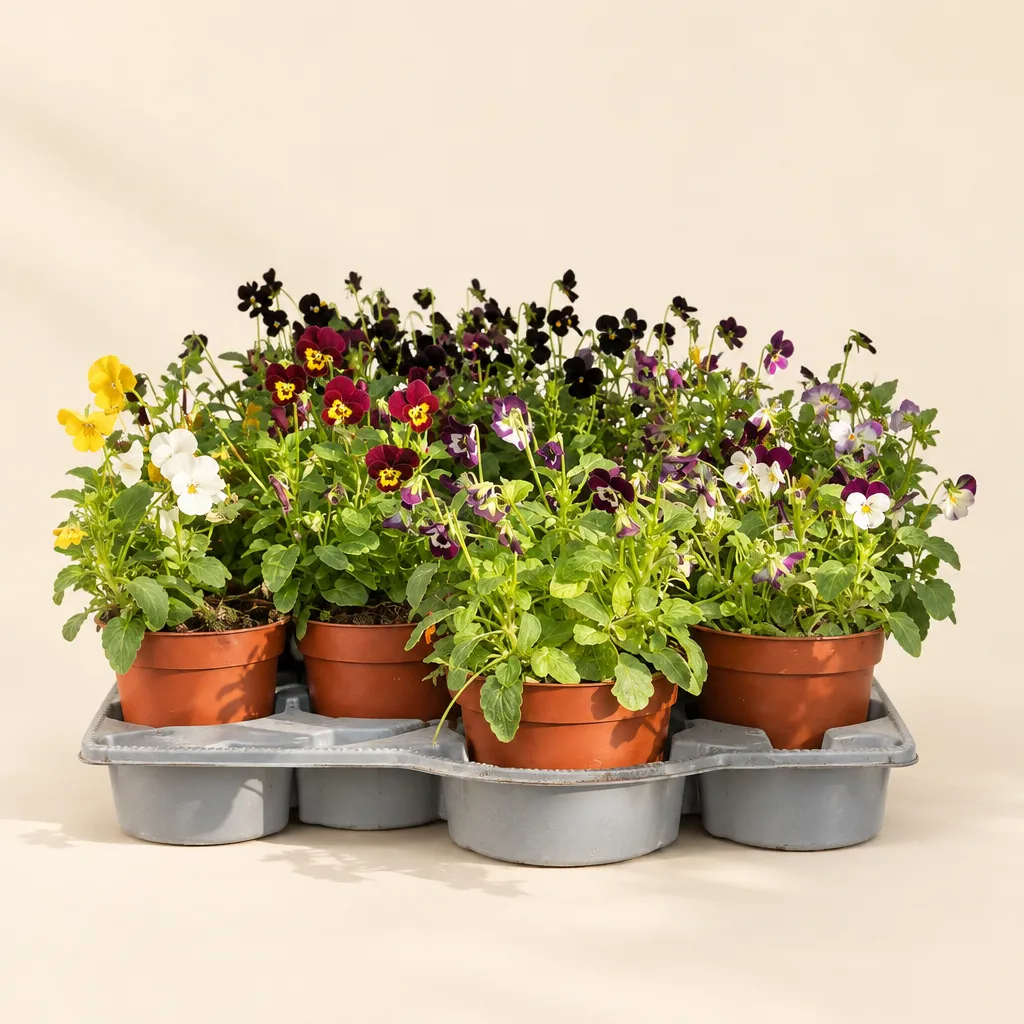 For illustration
You get a seasonal potted plant with flat flowers and dark markings that look like faces. Pansies bloom in the cooler season and suit a bright balcony. Water when the top layer of soil starts to dry out, and make sure the pot drains well.
Order it from us
- Botanical name
- Viola × wittrockiana
- Plant family
- Violaceae
- Identification
- Species
- Growth and life cycle
- You get a low, dense plant with green leaves and flat, colorful flowers. The pansy is a short-lived hybrid, usually grown in Israel as a seasonal plant from autumn to spring. In the summer heat, flowering slows and the plant usually finishes its season.
- Choosing a pot
- If the roots fill the pot, choose a slightly larger container with drainage holes. In a shared planter, leave space between plants for growth and airflow.
- Light
- Direct sunlight
- When to water
- Check the upper layer of potting mix and the weight of the pot. Water as the surface starts to dry, keeping the root ball moderately moist without leaving it saturated. Allow excess water to drain and empty the saucer or outer pot. Frequency changes with weather, pot size and root growth.
- Potting mix and drainage
- Choose an airy potting mix that holds a little moisture but lets excess water drain away. Make sure the drainage holes are clear, and do not use heavy garden soil in the pot.
- Feeding
- You can feed with fertilizer for flowering plants while the plant is growing and forming buds, following the package instructions. If the potting mix already contains fertilizer, or the plant is suffering from dryness, heat or prolonged wetness, there is no need to add any right now.
- Pruning and tidying
- Remove faded flowers along with their small stems to reduce seed formation and encourage more flowering. Remove yellow or rotten leaves and leave green leaves and new buds.
- The first few days at home
- Remove the wrapping and check that there is drainage and no water trapped in the decorative pot. Start in a bright, cool spot outdoors, and gradually introduce morning sun if the plant was previously in shade. Check the potting mix before watering and keep the plant in its current pot as long as the roots are not crowded.
- What to watch for
- If the stems grow long and there are few flowers, check whether there is too little light or the spot is too warm. If gray mold appears on the flowers or rot at the base, remove the damaged parts and check drainage and airflow.
- Placement and climate
- Choose a bright, airy balcony or window box during the cool season, rather than a warm room or a spot directly in drying airflow from an air conditioner. In the Israeli summer, the plant usually does not hold up well even in shade. In winter, let rainwater drain away and maintain airflow, especially on the humid coastal plain.
- Propagation
- You can propagate from seeds ahead of the cool season, but seeds you collect at home will not necessarily produce flowers in the same colors.
- Through the year
- Pansies do well in cool weather. You can grow them in fall, winter and spring. They can handle a little cold. They weaken in the heat, so replace them when it starts to get hot and plant new ones when it cools down. On hot days, partial shade is better. Water well, especially during dry spells.
- When to move to a bigger pot
- When the weather gets hot, the pansy fades. Replace it then, and plant a new one when the next cool season comes.
- Good habits
- Remove faded flowers to keep it blooming longer Give it morning sun and rich potting soil that drains well Water well, especially during dry spells On hot days, move it into partial shade
- What to avoid
- Don't water in the afternoon or evening. It can encourage disease. Don't expect the plant to hold up in hot weather. It doesn't tolerate heat. Don't use potting mix that doesn't drain. The plant grows best in a rich mix that drains well.
- Around pets
- We haven’t verified whether this plant is safe around pets. Ask us before choosing.
- Care level
- Needs regular attention