Peace lily · Spathiphyllum sp.
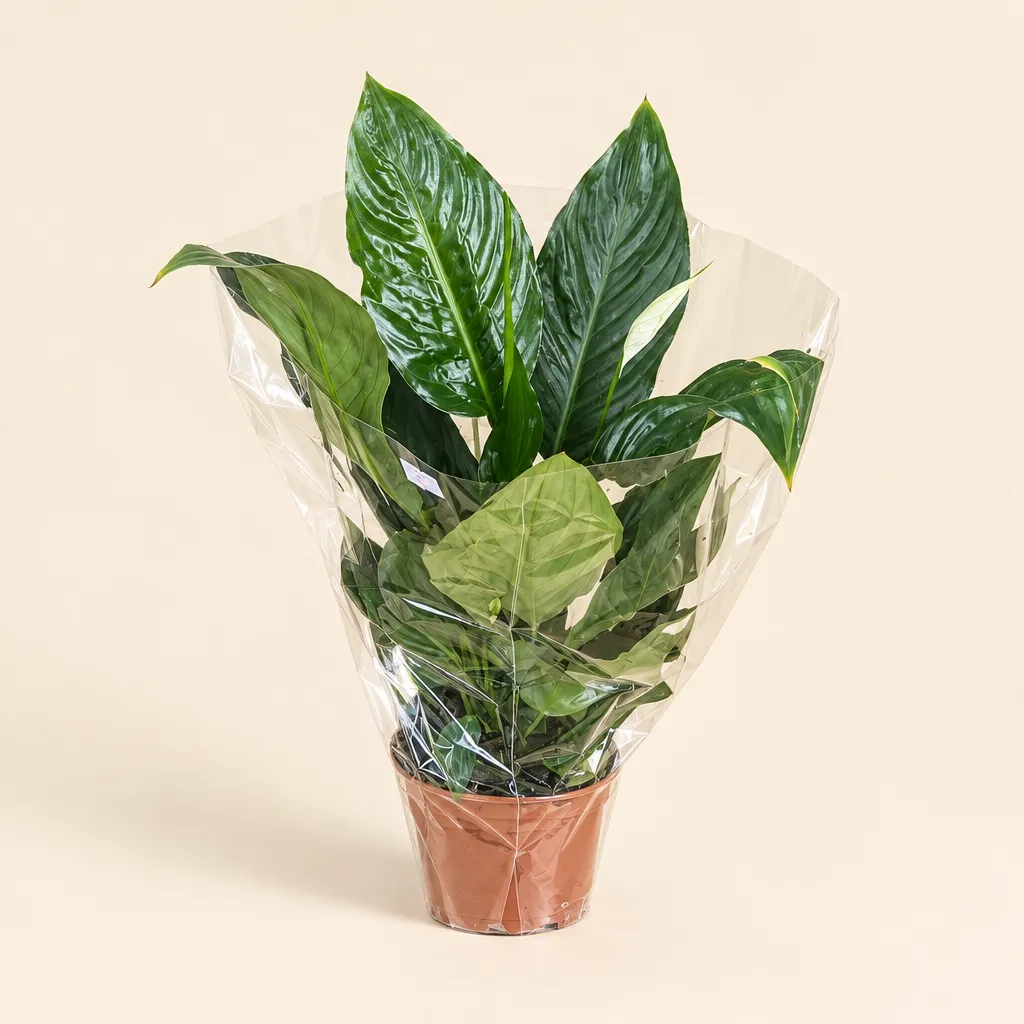 For illustration
You get a houseplant with glossy green leaves and white blooms that turn green over time. Place it in filtered light, away from direct sun. Water when the top layer of soil starts to dry, and empty any water left in the saucer.
Order it from us
- Botanical name
- Spathiphyllum sp.
- Plant family
- Araceae
- Identification
- Genus
- Growth and life cycle
- You get an evergreen perennial with broad, glossy leaves that grow densely from the base of the plant. During flowering, a white leaf appears around a small flower spike. It may turn green later.
- Choosing a pot
- Choose a pot with drainage holes, and keep the plant in its current pot as long as the roots are not crowded. When repotting is needed, choose a container only slightly larger than the root ball, and empty any water that collects in the saucer or decorative outer pot.
- Light
- Bright, indirect light
- Also copes with low light
- Yes
- When to water
- Check the potting mix with your finger at a depth of 2-3 cm, and water when this layer starts to dry out. Water until water runs out of the drainage holes, then empty the saucer or decorative outer pot. Drooping leaves with dry potting mix indicate a lack of water; yellowing or drooping while the mix stays wet may indicate too much water.
- Potting mix and drainage
- Choose an airy potting mix that holds a little moisture, and a pot with drainage holes. After watering, empty the saucer or decorative outer pot so the roots do not sit in water.
- Feeding
- Fertilize when the plant puts out new leaves, usually in spring and summer. When growth stops, or the plant is wilted or settling into your home, hold off on fertilizing.
- Pruning and tidying
- Cut yellowed leaves and spent flower stems close to the base with clean scissors, leaving green leaves in place. Wipe dust off the leaves with a soft, damp cloth.
- The first few days at home
- Place in a warm spot away from direct sunlight and protected from cold drafts; check moisture and wipe dust off the leaves with a damp cloth as needed.
- What to watch for
- If you see drooping leaves, check the potting mix before watering: dryness can explain the drooping, but if the mix is wet, check drainage rather than adding water. Brown tips can indicate dry air or a buildup of salts in the potting mix.
- Placement and climate
- Keep it out of direct sun. Partial shade works well. Keep it away from cold drafts and radiators.
- Propagation
- You can propagate by dividing a mature plant when repotting, preferably in spring, so that each section has its own roots and several leaves.
- Through the year
- During the growing season, keep the potting mix moist but not soggy. You can give it a little fertilizer. Growth slows in winter, so water a little less. Cold and drafts slow growth, and dry air can turn the leaf tips brown.
- When to move to a bigger pot
- Move it to a bigger pot only when the roots are very crowded. The plant does well in a snug pot. Choose one that's only about 2.5-5 cm wider than the current pot.
- Good habits
- Water when the potting mix has dried out a little. You can water from below, too. Keep the plant in bright, indirect light. Empty any water that collects in the saucer after watering. If the air is dry, you can set the pot above a tray of damp gravel.
- What to avoid
- Avoid direct sunlight. It turns the leaf tips brown. Don't let the potting mix dry out completely. The leaf tips may turn brown. Don't leave water standing in the saucer. It can make the roots rot. Don't use too much fertilizer. Salts can build up and burn the leaf tips and roots.
- Around pets
- We haven’t verified whether this plant is safe around pets. Ask us before choosing.
- Care level
- Needs regular attention