Star of Bethlehem · Ornithogalum
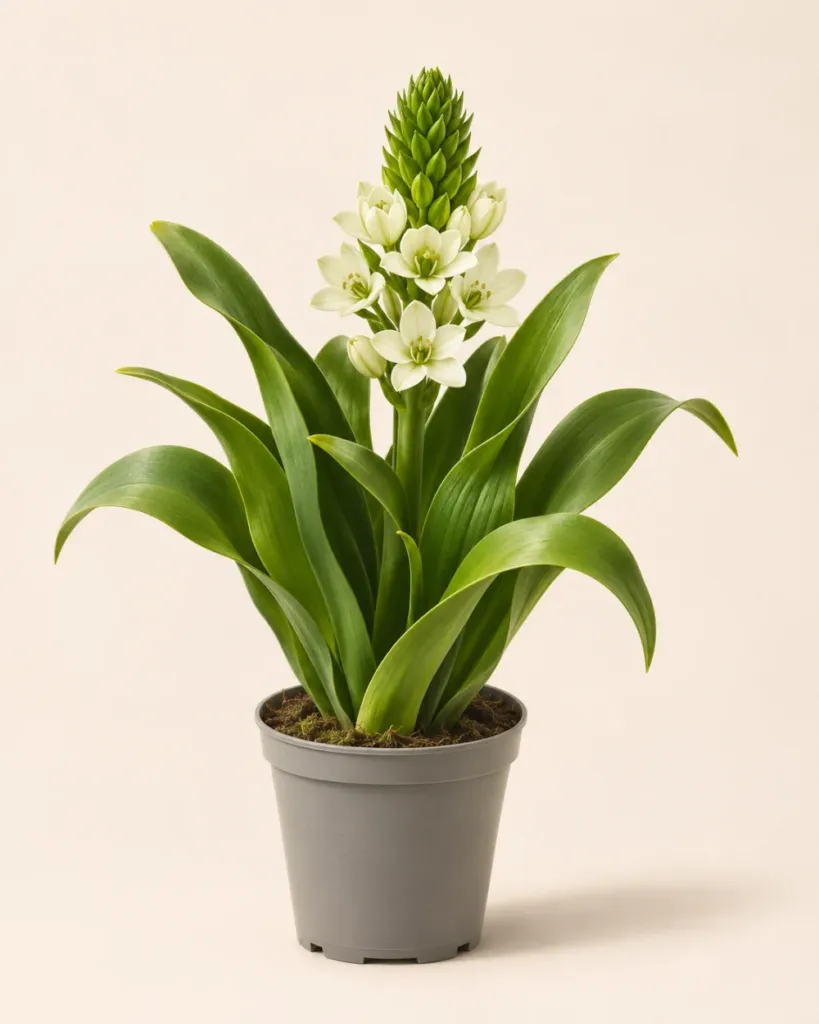 For illustration
Star of Bethlehem is a genus of bulb plants in the asparagus family. Its strap-shaped leaves feed the bulb, and an upright spike carries star-shaped flowers. Height, flowering season and growing needs vary by species.
Order it from us
- Botanical name
- Ornithogalum sp.
- Plant family
- Asparagaceae
- Identification
- Genus
- Growth and life cycle
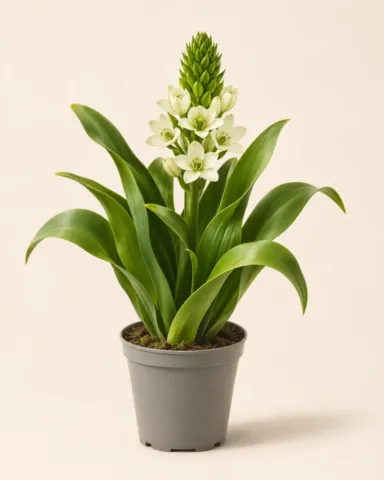
- A bulb plant with strap-shaped leaves and an upright flower cluster. A typical flower has six tepals. The bulb stores resources for renewed growth; the species, cultivar, mature height and flowering time of this item have not been verified.
- Choosing a pot
- If the root ball is crowded, choose a planting pot with drainage holes and an internal diameter about 2.5-5 cm larger than the current container, with a similar depth. The dimensions of the item itself have not yet been measured.
- Light
- Bright, indirect light
- When to water
- When the leaves are green and the plant is growing, check the substrate at a shallow depth. If the top has started to dry, water until water runs from the drainage holes, then empty the saucer or decorative pot. When the leaves gradually dry and the plant enters dormancy, reduce watering.
- Potting mix and drainage
- An airy, well-draining potting mix and a pot with drainage holes. When repotting is needed, choose an inner pot about 2.5-5 cm wider than the current container and not much deeper. This is a guideline for choosing a container, not the product dimensions.
- Feeding
- Fertilizing is not the first step after purchase. During active growth, you can consider fertilizer for potted plants according to the label; do not fertilize during dormancy.
- Pruning and tidying
- You can remove the flower stalk when the flowers have wilted. Leave green leaves until they yellow and dry on their own: they continue to feed the bulb.
- The first few days at home
- Remove the shop wrapping and check whether the pot has drainage. Start near a bright window, check the substrate before watering and leave it in its current pot as long as there is drainage and no sign of crowding.
- What to watch for
- Wilting while the substrate is wet, or a soft base, calls for checking moisture and drainage; gradual yellowing after flowering may be the start of dormancy. The condition of the leaves alone does not determine whether watering is needed.
- Placement and climate
- Keep in a bright, ventilated place. If moving it outdoors, start in bright shade and gradually acclimate it to morning sun. Protect it from strong midday sun, hot glass and standing water in winter.
- Propagation
- In suitable species, offsets can be separated during dormancy, if they have formed. Flowering in the next season depends on the species and conditions; there is no guarantee of a flowering date.
- Around pets
- Toxic to dogs and cats
- Around dogs
- Toxic to dogs and cats
- Care level
- Needs regular attention