Monstera · Monstera deliciosa
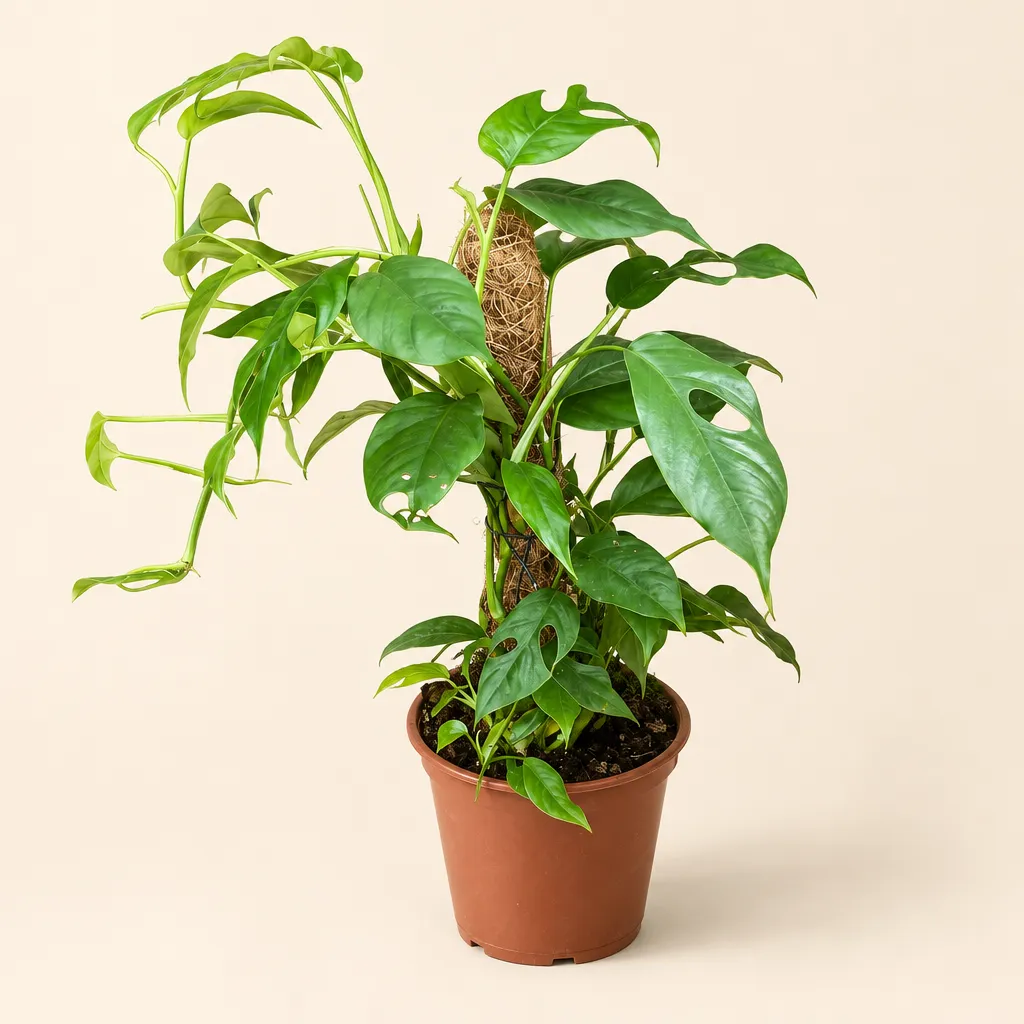 For illustration
You get a foliage plant in a pot 24 cm in diameter. The leaves are large and green, and develop splits and holes as they mature. Place it in bright light away from strong direct sunlight, and water when the top layer of soil dries out. A decorative pot is not included.
Order it from us
- Botanical name
- Monstera deliciosa
- Plant family
- Araceae
- Identification
- Species
- Growth and life cycle
- You get an evergreen perennial that usually grows as a climber and develops aerial roots. Depending on the species and the plant's maturity, the leaves may develop holes or splits. Keep it away from children and pets that might chew it, as chewing causes irritation in the mouth.
- Choosing a pot
- When the roots fill the pot, choose a pot with drainage holes that is only slightly larger than the current one. Add sturdy support when the plant starts to climb, and empty any water that collects in the decorative outer pot.
- Light
- Bright, indirect light
- Also copes with low light
- Yes
- When to water
- Push a finger a few cm into the potting mix, and water when this layer has dried out and the pot feels lighter. Water until it runs out of the drainage holes, then empty the saucer or decorative outer pot. Yellowing leaves together with potting mix that stays wet for a long time may indicate overwatering. Drooping leaves with dry potting mix and a light pot may indicate too little water.
- Potting mix and drainage
- Choose an airy potting mix that holds some moisture but lets excess water drain away, for example one with perlite and pieces of bark. Make sure there are drainage holes and that the pot is not standing in water.
- Feeding
- Fertilize when the plant is putting out new leaves and actively growing. When growth stops, or when the plant is suffering from too much water or dryness, hold off on fertilizing.
- Pruning and tidying
- Remove leaves that have dried out or turned completely yellow with a clean tool, and wipe dust off the leaves with a damp cloth. Leave green leaves and healthy aerial roots in place, and wear gloves to avoid contact with the irritating sap.
- The first few days at home
- Remove the wrapping and check that water can drain from the bottom of the pot. Choose a bright spot without direct sunlight or air conditioner drafts, and check the potting mix before watering. Keep the plant in its current pot as long as there is drainage and the roots are not significantly crowded.
- What to watch for
- If pale, dry patches appear on the side facing the window, check whether direct sunlight is scorching the leaves; brown tips can result from dry potting mix or air conditioner drafts. If you see pale dots, fine webs or white clumps, also check the undersides of the leaves and where they join the stem for pests.
- Placement and climate
- Indoors, choose a bright spot away from air conditioner airflow. On a balcony, choose bright shade and a spot sheltered from wind and strong summer sun. In winter, protect the plant from cold and prolonged rain. In coastal areas, allow airflow without strong wind and check that the potting mix does not stay wet.
- Propagation
- You can propagate from a stem cutting with a node where a leaf or aerial root grows, preferably with a healthy leaf too; a leaf with only its stalk, without a stem node, will not grow into a new plant.
- Through the year
- In the growing season, water when the top of the potting mix has dried out. You can also fertilize. Water a little less in winter. The plant is more prone to root diseases in cold weather, so check that the potting mix doesn't stay wet. Keep the plant warm year-round. Long spells of cold can harm it. Give it bright light out of direct sun, which can scorch its large leaves.
- When to move to a bigger pot
- Move the plant to a slightly larger pot once the roots reach the bottom and sides of the current pot.
- Good habits
- Give the plant a sturdy stake when it starts climbing so the stems don't break. Water when the top of the potting mix has dried out. Wipe dust off the leaves regularly. Keep the air warm and humid.
- What to avoid
- Keep the plant out of direct sunlight. It can burn the leaves. Avoid moving it into a much bigger pot. Go up one pot size at a time, and only once the roots have reached the bottom and sides. Avoid keeping the potting mix wet in the cold season. The plant is prone to root diseases.
- Around pets
- We haven’t verified whether this plant is safe around pets. Ask us before choosing.
- Care level
- Easy to care for