Lemon cypress · Hesperocyparis macrocarpa
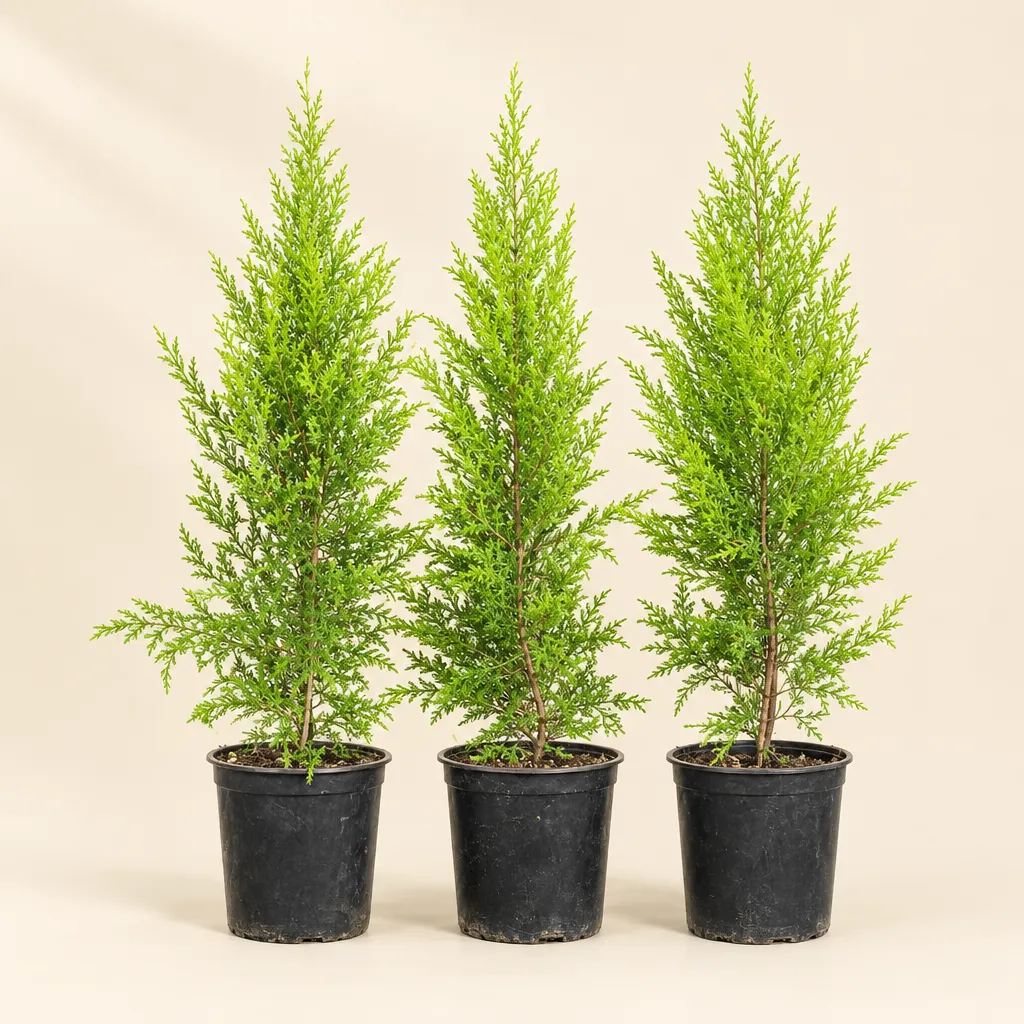 For illustration
You get a potted conifer with dense yellow-green foliage that gives off a lemon scent when rubbed between your fingers. Suitable for growing outdoors in a bright spot, in well-drained soil that does not dry out completely.
Order it from us
- Botanical name
- Hesperocyparis macrocarpa
- Plant family
- Cupressaceae
- Identification
- Cultivar
- Growth and life cycle
- You get an evergreen conifer with dense growth and delicate foliage that releases a lemon scent with a light touch. You can keep it compact in a pot, but over the years it grows and needs more room for its roots.
- Choosing a pot
- Choose a stable pot with drainage holes, slightly larger than the root ball rather than a much larger container. When the roots fill the pot and the potting mix dries out very quickly, you can move up to the next size.
- Light
- Direct sunlight
- When to water
- Check the potting mix with your finger at a depth of about 2 cm. When this layer starts to dry, water without waiting for the whole root ball to dry out. Water slowly until water comes out of the drainage holes, then empty the saucer. Dry tips with dry potting mix usually indicate a lack of water, while browning when the mix stays wet calls for a drainage check.
- Potting mix and drainage
- Choose an airy potting mix that holds a little moisture but lets excess water drain away. Open drainage holes are essential. Do not leave water in the saucer or decorative outer pot.
- Feeding
- Fertilize lightly when the plant is growing new branches, mainly in spring and mild weather. If the plant is dry, turning brown or struggling with intense heat, address the conditions first and do not add fertilizer.
- Pruning and tidying
- You can trim the green tips a little to keep the shape, and remove dry branches. Do not prune deeply into bare wood without foliage, as it usually will not grow new foliage.
- The first few days at home
- Remove the shop wrapping and check that the drainage holes are open. Start outdoors in a bright spot sheltered from strong wind, and gradually introduce morning sun. Check the potting mix before watering and keep the plant in its current pot as long as the roots are not crowded and there is no drainage problem.
- What to watch for
- If you see brown tips, first check whether the potting mix is very dry or stays wet for a long time. Faded foliage with fine webbing may indicate mites, especially in hot, dry conditions.
- Placement and climate
- Choose a balcony or garden with good airflow. In summer, protect the pot from overheating near a hot wall, and indoors keep it away from the dry airflow of the air conditioner. In coastal humidity, leave room for air around the foliage. During winter rains, make sure water drains away and check the potting mix before watering again.
- Propagation
- You can try propagating from semi-hardwood branch cuttings, but rooting needs controlled conditions and patience and is not easy at home.
- Through the year
- In the summer heat, give the plant partial shade during the hottest hours of the day. You can grow it in a pot if you water it regularly. Trim it back in spring to keep its size in check. It needs a potting mix that drains well, since root diseases are a known problem for this plant.
- Good habits
- Water regularly, since the plant needs regular watering in a pot. Use a potting mix that drains well. Give it partial shade during the hottest hours. Trim it back in spring to keep its size in check.
- What to avoid
- Avoid potting mix that doesn't drain, since root rot is a known problem for this plant. Avoid strong sun during the hottest hours of a hot day. The plant needs partial shade then.
- Around pets
- We haven’t verified whether this plant is safe around pets. Ask us before choosing.
- Care level
- Needs regular attention