Fiddle-leaf fig · Ficus lyrata
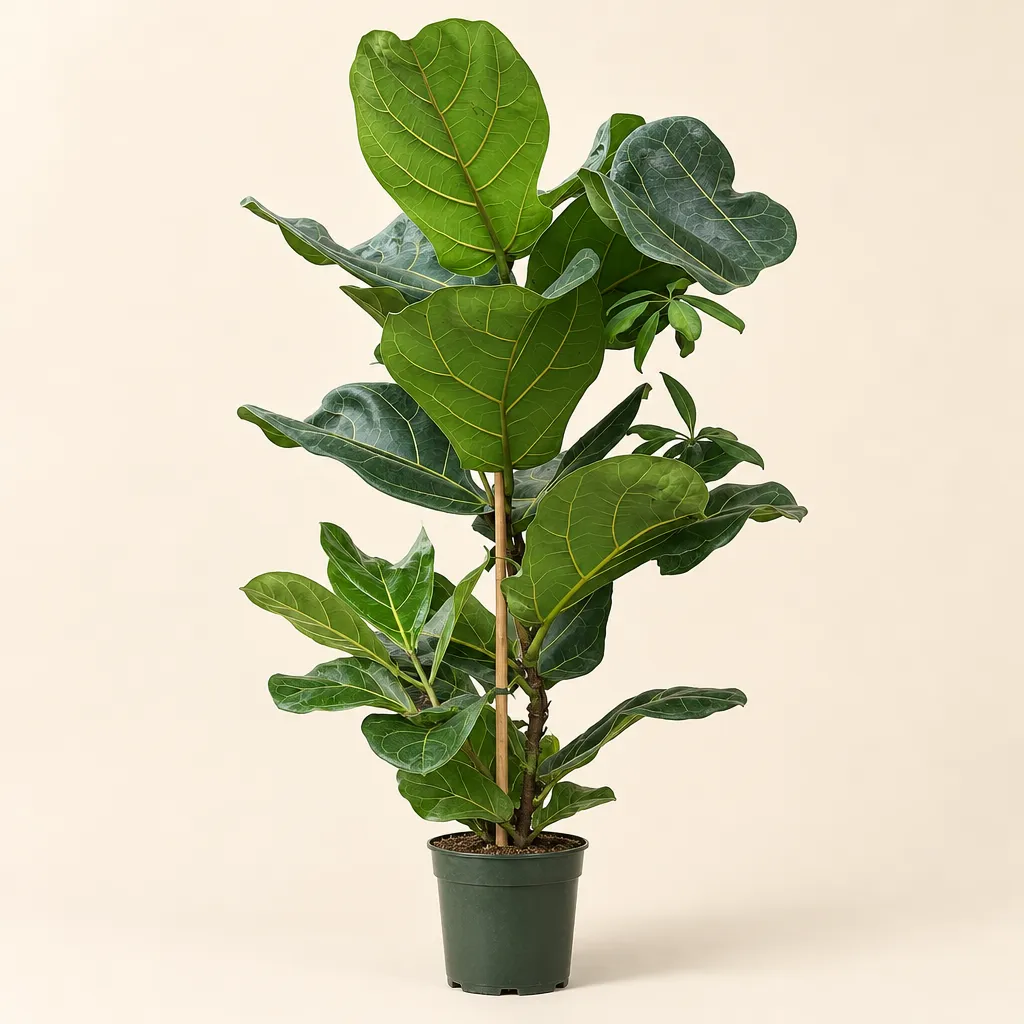 For illustration
You get a plant with large, glossy, fiddle-shaped leaves that adds height and greenery to a room. Place it in plenty of light, away from strong direct sunlight. Water when the top layer of soil dries out, and empty any water that collects at the bottom.
Order it from us
- Botanical name
- Ficus lyrata
- Plant family
- Moraceae
- Identification
- Species
- Growth and life cycle
- You get an evergreen tree with broad, thick, glossy leaves. In a pot, it grows over the years and can reach a considerable height in a bright home. The white sap may irritate skin and eyes, and the plant is not suitable for children or pets to chew on.
- Choosing a pot
- Choose a pot with drainage holes and a decorative outer pot that lets you remove the plant pot and empty out water. When the roots densely fill the potting mix, move up just one pot size so you do not leave a lot of wet mix around them.
- Light
- Bright, indirect light
- When to water
- Push a finger a few centimeters into the potting mix and water only when the top layer is dry and the pot feels lighter. Water thoroughly until water runs out of the drainage holes, then empty the saucer or decorative outer pot. Yellowing leaves in wet potting mix may indicate overwatering, while limp leaves in very dry mix may indicate thirst.
- Potting mix and drainage
- Choose an airy potting mix with added perlite or a similar material for aeration. Make sure the drainage holes are open and there is no standing water around the bottom of the pot.
- Feeding
- Fertilize when the plant is growing new leaves and gets good light, following the fertilizer instructions. When growth stops in winter, or when the plant is struggling, stop fertilizing and check the light and watering first.
- Pruning and tidying
- Wipe dust off the leaves with a damp cloth and remove dried leaves. Leave healthy green leaves in place. If you want to limit height and encourage branching, shorten a branch just above where a leaf joins it during active growth. Wear gloves and be careful with the sap.
- The first few days at home
- Remove the wrapping and check that the pot has drainage. Place it near a bright window, away from the air conditioner’s airflow, and check the potting mix before watering. Keep it in its current pot as long as there are no signs of crowded roots or drainage problems, and avoid moving it repeatedly from place to place.
- What to watch for
- If leaves are falling, check for wet potting mix, too little light or a sudden change of location; pale, dry patches after sun exposure may be sunburn. Sticky spots, brown bumps or fine webbing call for a pest check, including the undersides of the leaves.
- Placement and climate
- Indoors, choose a bright spot away from drying air conditioner drafts and hot glass; on a balcony, start in bright, sheltered shade and gradually introduce morning sun. In winter, protect from cold and wind, and on an exposed balcony, make sure rain does not leave the potting mix soaked for long periods.
- Propagation
- You can propagate from a stem cutting with a leaf and a bud in warm conditions and filtered light, but a single leaf without a piece of stem and a bud will not develop into a new plant; wear gloves because of the sap.
- Through the year
- Give it bright, indirect light and a warm spot where the temperature stays steady, away from drafts. Water regularly while it grows in spring and summer. Let the potting mix dry out a little between waterings. In winter, water less and keep the mix just slightly moist. Temperature changes near heating or air-conditioning vents can leave brown spots on the leaves. In summer, you can move it to a sheltered balcony. Bring it back inside when the outdoor temperature starts to drop.
- When to move to a bigger pot
- About every two years, move it to a slightly larger pot in spring. If the plant is already too big to repot, remove the top 2.5 cm of potting mix and replace it with fresh mix.
- Good habits
- Water only once the potting mix has dried out a little. Protect the plant from afternoon sun. Keep it away from air conditioning and heating vents. Changes in temperature can leave brown spots. Water less in winter.
- What to avoid
- Don't overwater. The plant is sensitive to too much water, and its leaves can drop if it gets either too much or too little. Keep it out of strong direct sunlight, which can scorch the leaves. Don't put it in a cold draft or near an air conditioning vent. Cold drafts can make the leaves drop, and changes in temperature can leave brown spots. Don't leave it in a dim spot. Too little light can make the leaves drop.
- Around pets
- We haven’t verified whether this plant is safe around pets. Ask us before choosing.
- Care level
- Needs regular attention