
Potted white star of Bethlehem
Ornithogalum · Identified to genus
15 ₪ for one · 20 ₪ for two
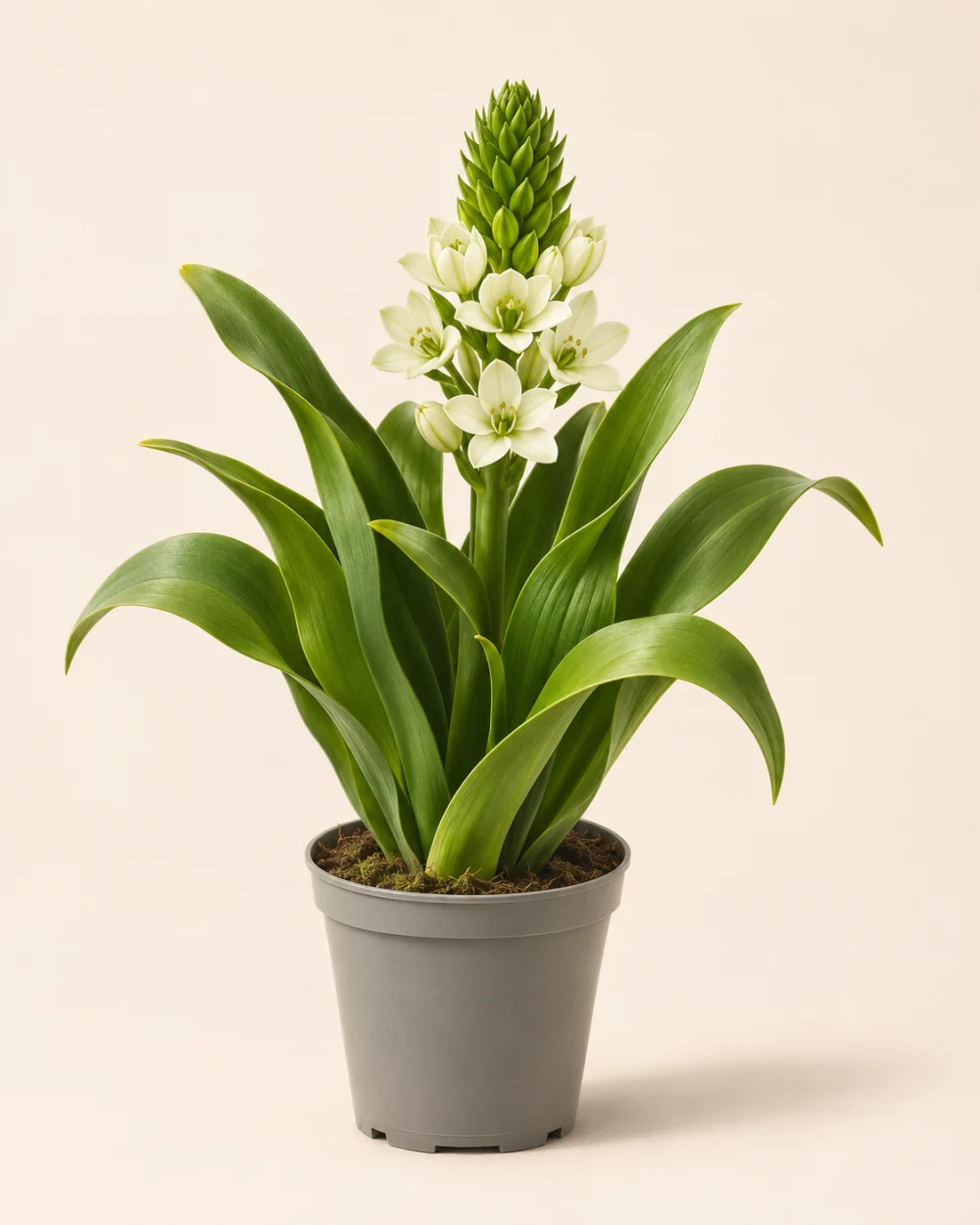
A flower spike rises above the leaves, covered in little white stars. When the flowers fade, the leaves keep feeding the bulb for its next round of growth.
Prices are for one or two nursery pots before delivery. Ask us what’s available, how big the plants are and what’s in bloom for your date. The price doesn’t include a decorative pot.
Before you bring it homeBefore you bring it home
Give this bulb a bright spot with room for its flower stalk. A few small checks will make settling in easier, for the plant and for you.
Pick its spot
Make room by a bright window, away from a direct air-conditioning draft and fierce midday sun. On a balcony, start in a sheltered spot and introduce stronger light gradually. If your pets can reach it, choose a different plant.
Get the pot and saucer ready
Ask us for the outside diameter of the nursery pot and the current plant’s total height. Have a saucer you can empty. If you want a decorative pot, check that the nursery pot lifts in and out easily. Check the roots before buying a larger growing pot.
Choose when you want it to flower
Giving it as a gift today? Ask what’s already in bloom. If you’d rather watch the stars open at home, ask whether we have a pot with a few open flowers and more buds still to come.
From the first day to the next flowers
The first day
Unwrap the pot, check that the drainage holes are clear and feel the mix before you add water. If it’s still moist, let the plant settle in without watering.
While the leaves are green
When the surface starts to dry, water until a little runs from the holes, then empty the saucer. If the plant wilts in wet mix, check for trapped water before watering again.
After the flowers fade
You can remove the spent flower stalk. Keep the green leaves so the bulb can replenish its reserves. As the foliage dries naturally, ease off watering and stop feeding. Increase watering gradually when new growth appears. There’s no fixed date for the next flowers.
Give it light, good drainage and a little time to rest.
Where should it go?
Pick a bright spot with airflow. If you move it outdoors, start in bright shade and ease it into morning sun. Protect it from strong midday sun, hot glass and water sitting around the roots in winter.
An east-facing window is a good place to start. At a hot west-facing window, try a sheer curtain or move the pot back from the glass. There’s no need to mist the leaves or set an exact light or humidity schedule from the photo.
When should I water?
While the leaves are green and growing, feel the potting mix just below the surface. When it starts to dry, water until the excess runs out. Empty the saucer or outer pot. Ease off as the leaves gradually dry and the bulb goes dormant.
Lift the pot as well as feeling the surface. A heavy, damp pot has enough water for now, even if the top looks dry. Check more often when it’s hot and water when the mix needs it.
What should I do first?
Remove the shop wrap and check the drainage holes. Start near a bright window, feel the potting mix before watering and keep the current pot as long as it drains and the roots have room.
Give it time to settle in first. When it’s actively growing, you can feed it with a fertiliser for potted plants, following the label. Pause feeding while the bulb is dormant.
A little extra room for the roots.
If the plant looks settled and the pot drains, you can leave it where it is. If the roots fill the pot or circle tightly, move it to a slightly bigger pot with drainage holes.
Keep the plant at the same depth, with the bases of the leaves above the mix. If the decorative pot has no hole, slip the nursery pot inside. Lift it out to water and let it finish draining before you put it back.
Add to the current pot’s diameter
2.5-5 cmA rough guide for repotting. If your current pot is 10 cm across, look for one about 13-15 cm wide inside and around the same depth.
Ask us for the actual pot, plant and root ball measurements. For an outer pot, compare the width of the nursery pot with the opening of the decorative one.
After the flowers, the bulb carries on.
Ornithogalum belongs to the asparagus family. The bulb stores energy underground. Strap-shaped leaves grow from it, followed by a separate flower spike. A typical flower has six white petal-like parts, called tepals.
Growing
The green leaves catch light and feed the bulb. Give them a bright spot and an airy mix.
Flowering
On a spike like the one in the picture, the lower flowers may be open while the buds above them are still closed. Cut away the flower spike once the blooms fade. Let green leaves yellow and dry on their own. They’re still feeding the bulb.
Resting and growing again
As the leaves dry naturally, ease off watering and pause feeding. When new growth appears, start watering again gradually. Some species form small daughter bulbs. You can separate them during dormancy if they’ve developed. Next season’s flowers depend on the species and growing conditions.
Is it resting or is there a watering problem?
Wilting while the mix is wet or a soft base calls for a check of moisture and drainage. Gradual yellowing after flowering can be part of dormancy. Feel the mix before deciding whether to water. If it’s wilting in wet mix, check whether the wrapping or outer pot is trapping water.
Do we know the species, mature height and flowering season?
The shop name and photo help us identify the genus. Species such as O. thyrsoides and O. conicum can look alike. Ask us about the exact species, variety, mature size or flowering season. Our care guide starts with a reference species and follows what you can observe in the pot.
Sources and plant identification
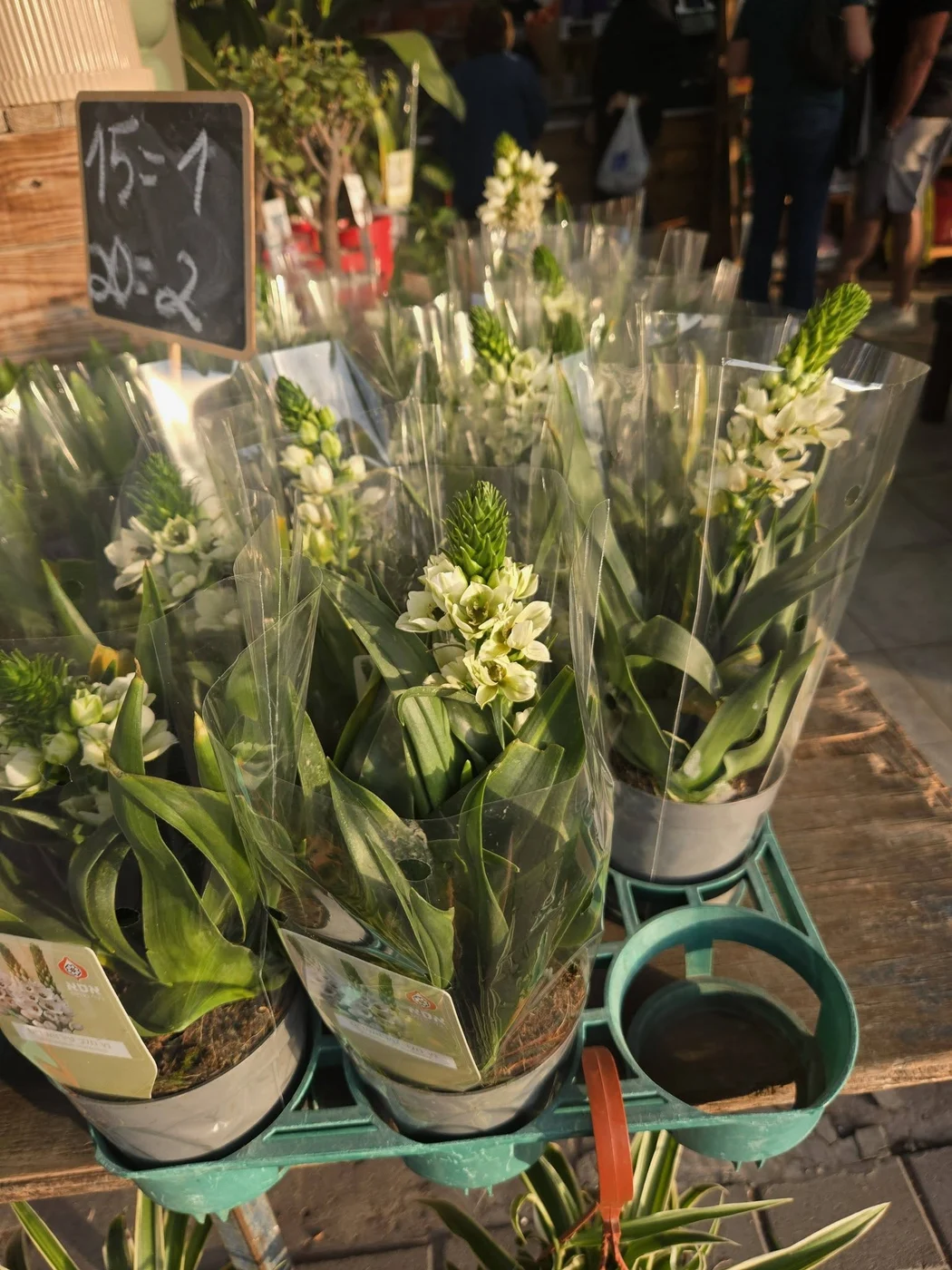
A look at the plant in the shop.
A living plant in a nursery pot. Size, number of flower spikes, pot colour and stage of bloom can vary. If it’s a gift, ask us what’s flowering now.
Ask us what’s availableGuides you might find helpful
All guidesYellow leaves? A few things to check first
Look at which leaves changed, how quickly and what’s happening around the plant before changing its care.
Read the guide: Yellow leaves? A few things to check firstReady to water? Feel the potting mix first
Use your watering day to check the plant, pot and mix. Then decide whether it needs a drink.
Read the guide: Ready to water? Feel the potting mix firstHow much light does your window really get?
Check the direction, distance from the glass, and how long sunlight reaches the spot you have in mind.
Read the guide: How much light does your window really get?A pot that looks good and fits your plant
Decide whether you’re planting straight in the pot or slipping the nursery pot inside. Measure the space inside.
Read the guide: A pot that looks good and fits your plant