- Botanical name
- Chrysanthemum × morifolium
- Plant family
- Asteraceae
- Identification
- Genus
- Growth and life cycle
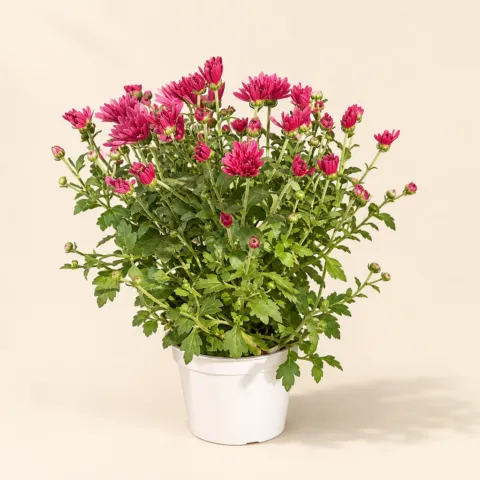
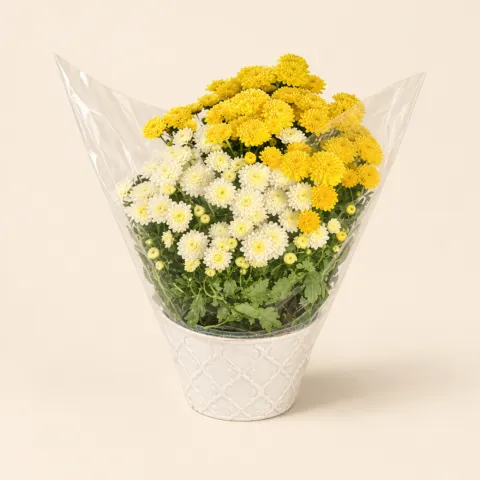
- You get a perennial plant with dense growth and many flowers at the tips of the stems. It naturally blooms when the days get shorter, but a nursery can adjust the timing. After flowering, you can keep growing it, even if its shape becomes less compact.
- Choosing a pot
- Toxic to dogs and cats.
- Light
- Depends on the variety and location
- When to water
- Check the potting mix with your finger at a depth of 1-2 cm. Water when this layer starts to dry, before the whole pot dries out. Water until water comes out of the drainage holes, then empty the saucer or decorative container. Drooping leaves in dry potting mix suggest thirst, while yellowing in potting mix that stays wet may indicate too much water.
- Potting mix and drainage
- Use a potting mix that holds a little moisture but lets excess water drain easily. Make sure there are drainage holes and that the pot is not standing in water.
- Feeding
- Fertilize lightly when there is active new growth, following the fertilizer instructions. There is no need to rush to fertilize right after purchase. Do not fertilize a dried-out plant or one suffering from waterlogged potting mix.
- Pruning and tidying
- Remove faded flowers along with the section of stem above the nearest healthy leaf, leaving green leaves and buds in place. Once flowering is over, you can shorten long stems, but avoid pinching back when new buds are already developing.
- The first few days at home
- Remove the wrapping and check that the drainage holes are clear. Place in a bright, relatively cool spot, away from air-conditioning drafts, and check the potting mix before watering. Keep it in its current pot during flowering as long as drainage is working and the roots are not significantly crowded.
- What to watch for
- If brown spots or mold appear on the flowers, check whether they are staying wet and improve airflow. Sticky leaves or misshapen buds call for a check for aphids, especially at the growing tips and on the undersides of leaves.
- Placement and climate
- Indoors, put it in a fairly cool spot by a bright window, out of direct sunlight. This helps the flowers last longer. On a balcony, it does fine with a few hours of sun a day. Keep the potting mix moist, but don't let water stand in the container.
- Propagation
- You can propagate from young, non-flowering stem cuttings in spring. Keep them in moist, airy potting mix with plenty of light but no direct sun until they root.
- Through the year
- A potted chrysanthemum blooms when the days get shorter and the nights are long. Light at night, such as from a nearby outdoor lamp, can delay flowering or stop it altogether. These plants are sold to decorate your home or to grow outdoors in a pot for the season. Indoors, they do well by a bright window out of direct sunlight.
- Good habits
- Water when the surface of the potting mix feels dry. Keep watering until water comes out of the drainage holes.
Indoors, put it by a bright window, out of direct sunlight.
Keep it in the dark at night, away from lights that come on.
- What to avoid
- Don't put it near outdoor lights that stay on at night. The light can delay flowering or stop it altogether.
- Around pets
- Toxic to dogs and cats
- Around cats
- Toxic to dogs and cats
- Around dogs
- Toxic to dogs and cats
- Care level
- Needs regular attention
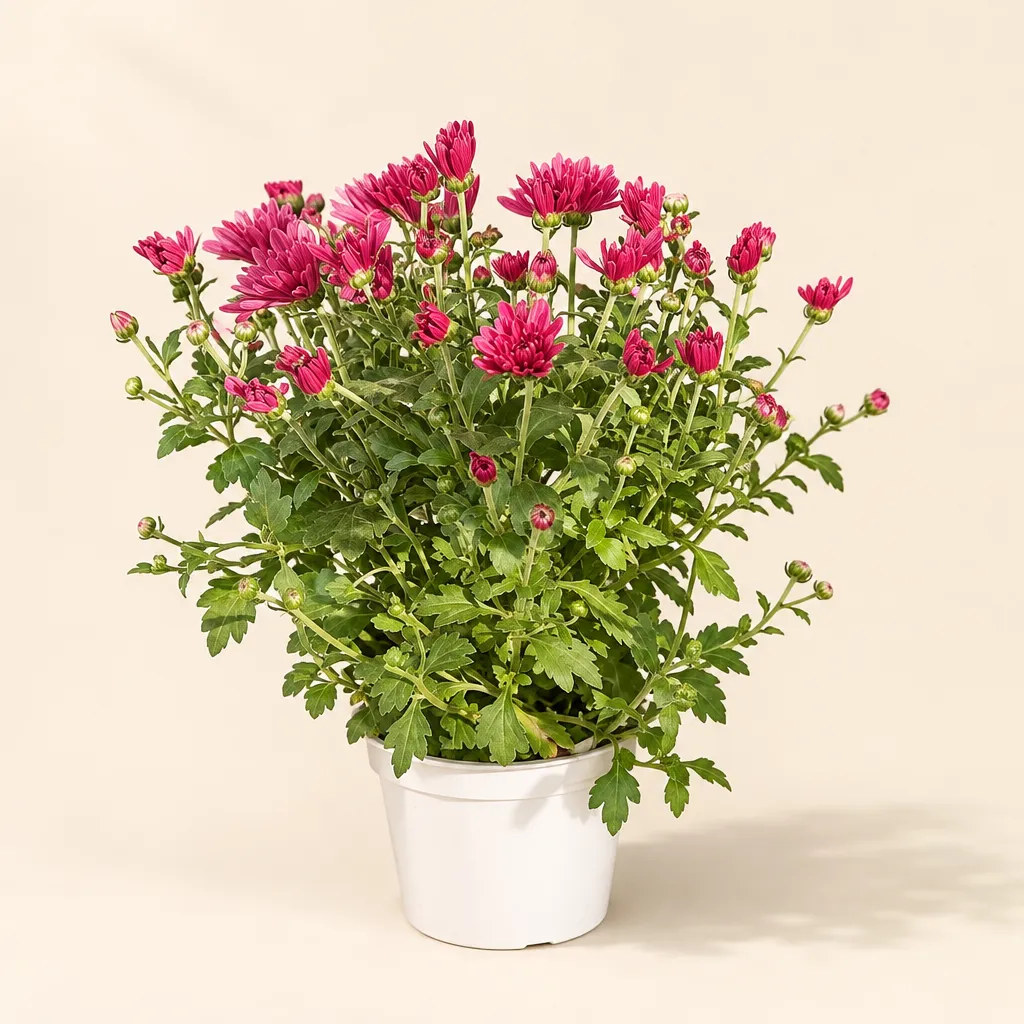 For illustration