Senecio · Senecio
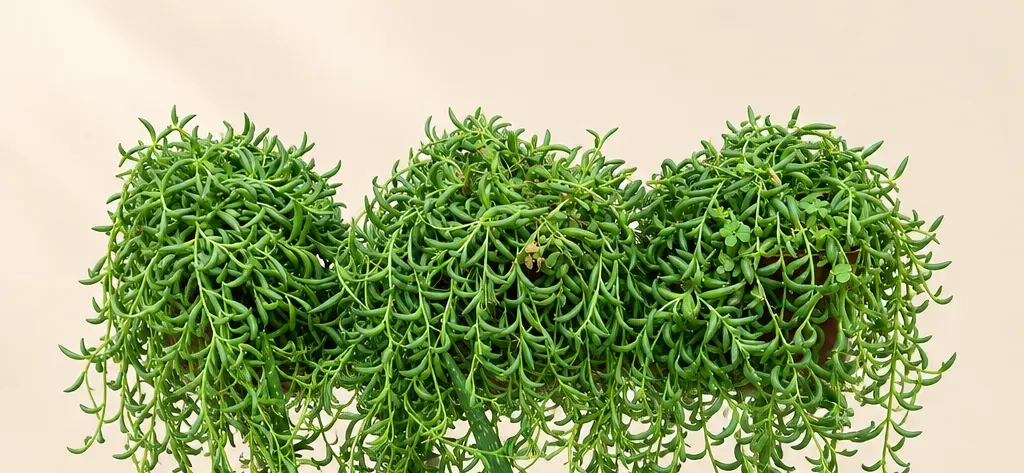 For illustration
Senecio is a trailing succulent groundsel (Senecio), with cascading stems and small, fleshy leaves that store water. The exact species has not been identified, so the guidance here applies to succulent groundsels in general.
Order it from us
- Botanical name
- Senecio
- Growth and life cycle
- A perennial succulent Senecio with trailing stems and small, fleshy leaves that store water. Its shape and growth rate depend on the species.
- Choosing a pot
- Choose a pot with drainage holes. If the current pot is already crowded, choose one only slightly larger than the root ball. Use a well-draining succulent mix, and empty any water that collects in the saucer or decorative outer pot.
- Light
- Depends on the variety and location
- When to water
- Before watering, check with your finger that the mix is dry several centimeters down and that the pot feels light compared with its weight after watering. Once the mix has dried thoroughly, water until water runs out of the drainage holes, then empty the saucer or decorative outer pot. Soft, translucent leaves may indicate too much water. Wrinkled leaves together with dry mix and a light pot may indicate too little.
- Potting mix and drainage
- Choose a succulent mix that dries out well and a pot with drainage holes. Empty any water that collects in the saucer or decorative outer pot. On a balcony, protect the plant from prolonged rain in winter.
- Feeding
- Fertilize lightly only when you see new growth and the plant looks healthy. After bringing it home, when growth stops, or when the plant is struggling with heat or too much water, hold off on fertilizing.
- Pruning and tidying
- Remove dry leaves and dried-out stems with clean scissors. Leave healthy growth in place. Before cutting back significantly, identify the species so you can prune to suit its growth habit.
- The first few days at home
- Remove the wrapping and check for drainage holes. Leave it in its current pot for now. Start near a bright window, away from direct midday sun and air-conditioning drafts. Move it to the balcony gradually, starting in bright shade. Before watering, check with your finger that the growing medium is dry below the surface too and that the pot feels relatively light, not just that the top layer is dry.
- What to watch for
- If you see soft, translucent leaves or a stem base turning black, check whether the growing medium stays wet - these may be signs of too much water and rot. Wrinkled leaves together with a light pot and dry growing medium may indicate a lack of water.
- Placement and climate
- Choose a bright, airy spot, away from direct air-conditioning drafts and hot glass. On the balcony, get the plant used to morning sun gradually. In summer, protect it from strong midday sun. In winter, keep it away from prolonged rain and standing water, especially on a damp balcony near the sea.
- Propagation
- If you have a suitable stem, you can usually propagate it from a cutting: let the cut dry for a few days, then plant it in a well-draining growing medium. It's worth identifying the species before you start.
- Through the year
- In summer, keep the plant out of direct midday sun. It can scorch the leaves.
- When to move to a bigger pot
- When you repot, choose a pot only slightly bigger than the old one. Extra potting mix stays damp for a long time and can cause root rot.
- Good habits
- Water when the leaves start to look a little wrinkled. Use a well-draining potting mix for succulents and cacti. Give the plant bright light, but keep it out of direct midday sun in summer.
- What to avoid
- Don't water too often. Too much water can cause root rot. Don't move the plant straight into strong sunlight outdoors. The leaves may get scorched.
- Around pets
- We haven’t verified whether this plant is safe around pets. Ask us before choosing.
- Care level
- Needs regular attention